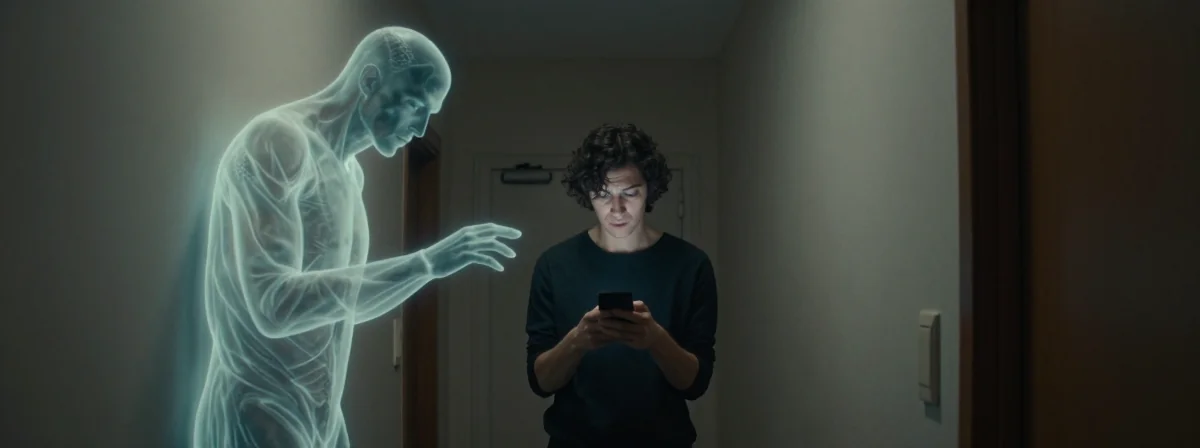
You claim the system is compromised—you’ve seen the intrusion, you’ve felt the attacks—but you still let the most vulnerable user log into the same infected node. It sounds like a critical failure in logic, but if you debug the human response to fear, the pattern makes a terrifying kind of sense. We aren’t rational actors; we are processors trying to justify noise.
System Anomalies
The Denial Protocol You see the logs, you feel the system lag, but you still let the new user access the corrupted directory. It looks like negligence, but it’s actually a feature of human cognition. When the threat is paranormal, your brain runs a denial script to keep you functional—you rationalize the scratches and the bad feelings because the alternative, accepting a hostile entity is in the house, requires an immediate action you likely can’t afford.
Legacy Infrastructure Vulnerabilities Living in the UK means operating on legacy architecture that is centuries old. Unlike the US, where 100-year-old buildings are rare anomalies, these ancient structures are the standard OS, and they come with inherent background processes we call “hauntings.” You can’t just patch the system by moving when the cost of living is already maxing out your resources; you have to tolerate the ghosts in the machine.
Visual Pattern Matching Errors That image in the doorway? It’s a classic overfitting error. Your brain is desperate to find a signal in the noise, so it matches the dark spots and the wood grain to a known threat signature—like a bald head or an alien face. Some users see the intrusion clearly; others just see the texture of the door, which suggests the anomaly isn’t in the file, but in how our specific rendering engines interpret low-resolution data.
Signal-to-Noise Ratio Half the data points in these networks are garbage—people scripting scenarios for engagement. It creates a high noise floor that makes genuine anomalies harder to detect. When you finally see a raw, unedited log of a creature with long fingers and hollow eyes, your skepticism filter is already so overloaded that it flags the truth as just another script.
Independent Verification The most convincing data isn’t the photo; it’s the corroborated witness testimony. When your boyfriend zooms in on the doorway and describes the exact same pale, eyeless entity you saw—without you prompting him—that’s a confirmed anomaly. It’s no longer a subjective hallucination; it’s a replicated event across two different observers.
Environmental Variables Before you assume the system is haunted, check the hardware. Heat differentials between the inside and outside of a cupboard can create enough pressure to move a door on its own. It’s not a demon; it’s just physics exploiting a mechanical vulnerability.
You don’t have to believe in ghosts to respect the data. Whether it’s a spirit, a gas leak, or a trick of the light, the system is generating errors that you can’t ignore. The real question isn’t whether the photo is real—it’s whether you’re ready to admit that your environment might be trying to tell you something.