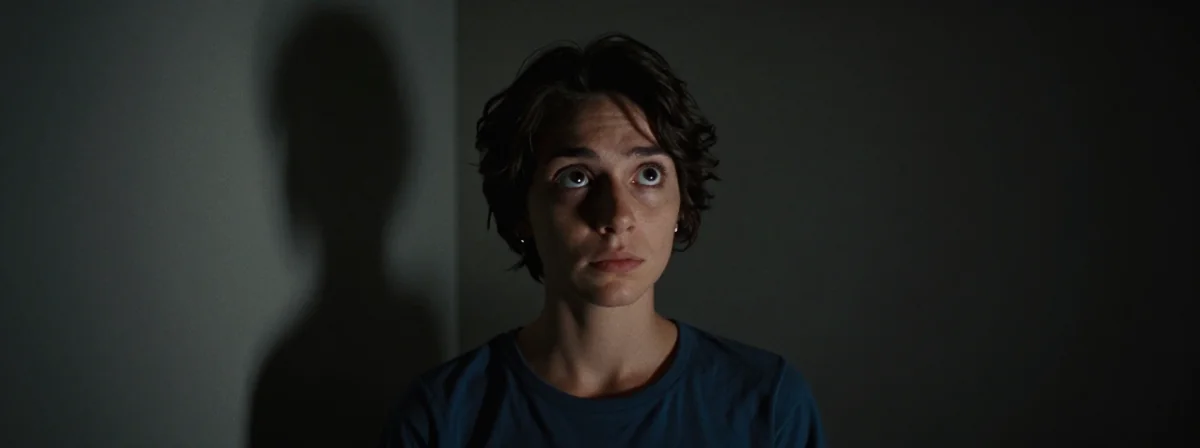
You are standing perfectly still on a trail you have walked a hundred times, but suddenly, the air feels heavy. You aren’t seeing a predator, and you haven’t heard a snap of a twig, yet a primal alarm is blaring in your mind. Most people will dismiss this as anxiety or an overactive imagination, but what if that feeling is actually a sophisticated warning system operating below the surface of your conscious thought?
The sensation of being watched or an inexplicable urge to flee is a common occurrence among hikers, campers, and those who spend significant time in dense woodlands. While we often look for tangible proof of danger—a bear, a snake, or a steep cliff—the human brain is wired to process subtle environmental cues long before we consciously register them. We are going to break down the physiological and psychological mechanisms behind these “creepy” feelings to determine if they are mere paranoia or a legitimate survival instinct.
Consider the experience of a cyclist on a remote gravel trail. Everything appears safe, yet something feels “off.” The evidence suggests that in these moments, your subconscious may be detecting patterns in the environment that your conscious mind overlooks. It is worth analyzing why these instincts trigger and whether ignoring them could be a critical mistake.
Why Do We Turn Around When Nothing Is There?
There is a phenomenon often reported by experienced outdoorsmen where they abruptly turn back on a hike for no discernible reason. One moment the trail is inviting, and the next, it feels ominously wrong. This is frequently attributed to the “lizard brain”—the amygdala—responsible for processing fear and survival instincts. What we can verify is that this part of the brain reacts to stimuli milliseconds before our conscious awareness catches up.
In one account, a rider on a populated trail suddenly felt an overwhelming urge to retreat after entering a secluded stretch near a widening river. There was no immediate threat visible, but the feeling was intense enough to compel an immediate exit. This remains unconfirmed, but the leading theory is that the subconscious mind noticed an anomaly—the lack of other people, a strange silence, or a visual inconsistency—and triggered a flight response. It is safer to treat these gut feelings as data points rather than dismissing them as irrational fear.
Is the “In-Between” Light Actually More Dangerous?
Many individuals report that the deepest sense of dread does not occur in pitch darkness, but rather during the “in-between” times—dawn, dusk, or heavily overcast afternoons. This is the time when the light is flat, shadows are elongated, and depth perception becomes unreliable. Visual information is compromised, forcing the brain to work harder to identify threats, which naturally increases anxiety levels.
The “in-between” light creates a visual ambiguity where familiar shapes look foreign. This is a known psychological stressor. When the brain cannot clearly categorize a shape—like a fallen log that looks momentarily like a crouching figure—it defaults to a threat assessment stance. This state of hyper-vigilance is exhausting and manifests as that “creepy” feeling where the woods seem to be holding their breath. While it might not be a physical danger, the sensory confusion makes you significantly more vulnerable to actual environmental hazards.
What Explains the Sudden Silence of Wildlife?
The auditory landscape of a forest is rarely silent. Birds chirp, squirrels rustle, and insects buzz. When this ambient noise abruptly stops, it is a tangible indicator that something has changed. In forensic analysis of predator-prey dynamics, silence is often the most reliable evidence of an immediate threat.
If you are walking through the woods and the chatter of wildlife suddenly ceases, it is highly probable that a predator is moving through the area. This is not supernatural; it is biological. Smaller animals go quiet to avoid detection. Therefore, if you find yourself in a section of woods where the sounds of nature have been muted, your instinct to feel uneasy is well-founded. The silence is an objective data point suggesting you are no longer alone.
Are You Hearing Things or Is Your Brain Compensating?
A particularly unsettling experience reported in the deep woods is the sound of murmuring or voices when no one is around. This can range from a distinct whisper to a sensation of pressure in the ear, similar to the “voice” a cyclist heard just before deciding to flee. Before jumping to supernatural conclusions, we must look at physiological explanations.
One possibility is auditory pareidolia—the brain’s attempt to find patterns in random noise. The wind through the leaves or the sound of water can be interpreted by the brain as human speech, especially when the listener is already anxious. However, we must also consider the “infrasound” theory. Strong winds or atmospheric pressure changes can produce sound waves below the range of human hearing (20Hz), which can cause physical sensations like pressure in the ears, anxiety, and even visual hallucinations. The evidence suggests these sounds are real, but their source is likely environmental rather than paranormal.
Could It Be Anxiety or a Genuine Threat?
It is fair and balanced to acknowledge that sometimes, fear is just fear. The internet is filled with stories that prime us to expect the worst in the woods, creating a feedback loop of anxiety. If you go into the forest expecting a monster, every shadow becomes one. However, differentiating between generalized anxiety and a specific survival instinct is crucial.
Generalized anxiety tends to build gradually and persists regardless of location changes. In contrast, the “lizard brain” instinct is often sudden, acute, and specifically tied to a directional cue or a sudden change in the environment. If you feel unsafe, the logical approach is to remove yourself from the situation immediately. Whether the threat was a mountain lion or merely a trick of the light, the act of leaving resolves the risk. There is no harm in erring on the side of caution.
Why We Should Trust Our Instincts Over Our Eyes
We tend to rely heavily on our sight, but vision is easily fooled in the complex environment of a forest. Your subconscious, however, is processing a million micro-signals every second—the smell of the air, the humidity, the texture of the ground underfoot. When all these variables align in a way that suggests “danger,” your conscious mind might not see the reason, but your body knows.
The feeling of the woods being “unsafe” is not just a ghost story trope; it is a biologically grounded defense mechanism. Whether it is a predator you cannot see or a psychological response to isolation, the sensation is real. The next time the hair stands up on the back of your neck and the trail ahead looks wrong, don’t wait for visual confirmation. Turn around. Your survival instincts have been honed over millions of years, and they are likely detecting something that you simply cannot verify yet.