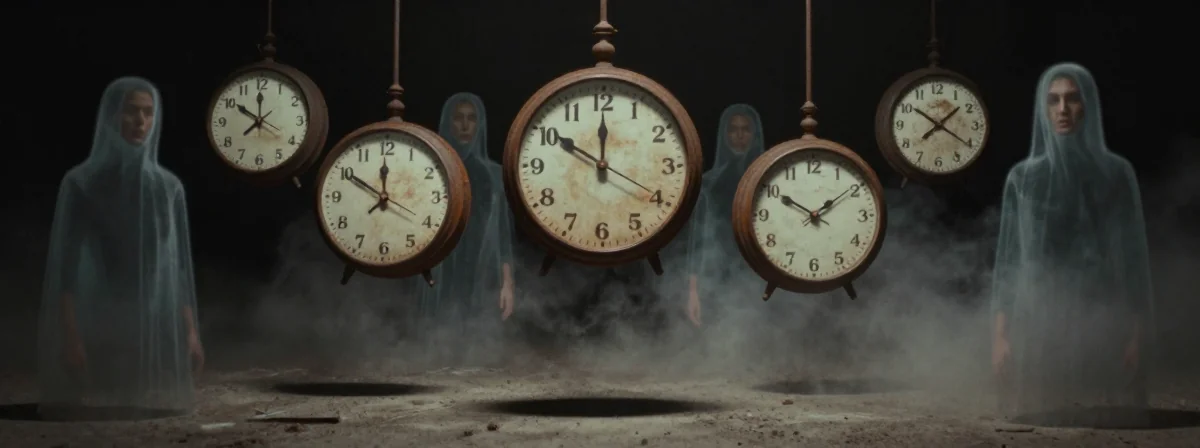
We have all felt that sudden, jarring sensation that the world isn’t quite right—a door where there shouldn’t be one, a familiar street that looks alien, or a gap in time that logic cannot fill. Most of us shake it off as fatigue or a trick of the light. But what happens when these moments persist, when multiple witnesses verify the impossible, or when physical evidence seems to contradict our own perception? We are left standing on the precipice of the unexplained, forced to question the reliability of our own senses and the nature of the reality we inhabit.
Investigating these anomalies requires a forensic approach. We must strip away the emotional weight of the experience and look strictly at what can be verified. While it is tempting to label every shadow as a ghost or every lost minute as an alien abduction, the truth often lies in the gray area between psychological phenomena and genuine mysteries. The following cases examine the friction between what we experience and what we can prove.
Why Do We Feel Compelled to Enter the Darkness?
There is a recurring motif in unexplained experiences: the basement. In fiction and folklore, the basement represents the subconscious, the hidden, and the dangerous. Yet, when people report frightening occurrences, they often begin with the decision to descend into that darkness. It begs the question—why do we go down there when every instinct screams for us to run?
The evidence suggests this is not merely stupidity or curiosity. It is a psychological compulsion to confront the source of fear. In one account, individuals entered a basement specifically because “that is how every scary story goes,” acknowledging the trope while walking right into it. This self-awareness does not diminish the terror. When the environment turns hostile—when a chopped tree outside looks “absolutely terrifying” or the darkness feels oppressive—it becomes difficult to dismiss the fear as mere imagination. We are dealing with a primal reaction to an environment that feels fundamentally wrong.
The Environmental Hazard You Cannot Ignore
Before we look to the paranormal for answers, we must rule out the mundane. Carbon monoxide is a silent, odorless killer that frequently mimics the symptoms of a haunting. Hallucinations, feelings of dread, and confusion are classic signs of exposure. If you find yourself in a location where the air feels heavy, the fear is irrational, and your senses are distorting, the immediate step is not to grab a camera, but to get a carbon monoxide detector.
This is the most logical explanation for many “haunted” basements. The evidence is clear: CO poisoning causes the brain to malfunction. What we can verify is that many so-called hauntings cease immediately after ventilation is improved. We must remain skeptical of supernatural claims until this physical threat is definitively ruled out. To ignore the science in favor of a spooky story is not just foolish; it is dangerous.
Analyzing the Discrepancy of the Castle Tower
One of the most compelling accounts involves a couple exploring a small castle on the European shorelines. The husband went to use the restroom and, upon returning, could not locate his wife in the lookout tower. What follows is a textbook example of a “time slip” or missing time experience. He reported searching frantically for two hours as night fell, shouting for his wife with no response. His panic was absolute.
When he finally found her, she claimed he had been gone for only five minutes. Here we have a direct conflict in testimony. The husband experienced two hours of terror; the wife experienced a brief, mundane wait. The evidence suggests a subjective distortion of time, potentially caused by the stress of the environment or a disassociation event. However, the introduction of a third party complicates the analysis significantly.
The Anomaly of the Vanishing Helper
During his search, the husband enlisted the help of a tourist to find the tower. This man allegedly searched with him, only to walk away without a word the moment the wife was found. The weirdest detail? Security guards at the castle stated they were the only ones who entered via the tourist center, and CCTV footage allegedly showed only the husband.
If the guards are correct, the helper never existed. This transforms the scenario from a simple dispute over time into a potential paranormal event. The husband describes an “out of body flush of colour and anxiety” when the helper left. This suggests the entity may have been a manifestation of his own panic—a “tulpa” or thought-form—or a genuine interactive anomaly. We cannot verify the helper’s existence, but the consistency of the husband’s story adds weight to the claim. The guards’ dismissal as “stupid tourists” is convenient but does not explain the husband’s detailed memory of interaction.
The Architecture of False Memories
Not all anomalies involve time; some involve space. Consider the case of the individual who walked past a house identical to their own—same color, same layout, same positioning of lawns and roads. They were with a friend who allegedly claimed a tutor lived there. Years later, the friend denied the event ever happened and denied ever having a tutor.
The most logical explanation here is a “dream disguised as a memory.” The human brain is remarkably adept at constructing false narratives, especially when familiar elements like our own home are involved. However, the specificity of the memory—the arrangement of the surrounding houses, the friend’s alleged comment—makes it difficult to dismiss entirely. Could it be a glimpse into a parallel dimension, or is it simply a glitch in how we store long-term memory? Without the friend’s corroboration, this remains unconfirmed, but it serves as a fascinating case study for the fallibility of the mind.
Distinguishing Dreams from Reality
We must be fair and balanced when evaluating these claims. The brain is a complex organ that can easily misinterpret signals. A lens flare in a photograph is not a ghost; a vivid dream is not a prophecy. But when multiple senses are engaged—when time seems to stop, when a stranger helps you who doesn’t exist, when a physical location defies your memory—we must admit that our current understanding of reality is incomplete.
The evidence suggests that while many experiences can be debunked by carbon monoxide or psychology, a small percentage remain stubbornly unexplained. These are the cases that demand our attention. They challenge us to look closer at the world around us and ask what else we might be missing.
Reframing the Unexplained
Ultimately, the value in investigating these stories lies not in proving ghosts are real, but in understanding the limits of human perception. Whether the husband in the castle lost two hours to stress or to a rift in spacetime, his terror was real. Whether the doppelganger house was a dream or a dimensional bleed, the confusion it caused was genuine.
We approach these claims with skepticism not to debunk, but to find the truth. Sometimes the truth is a gas leak; sometimes it is a mystery that defies all logic. We must be prepared to accept either outcome. The next time you find yourself in a basement, or walking down a street that feels slightly “off,” pay attention to the details. Verify what you can. And remember: just because you can’t explain it doesn’t mean it didn’t happen.