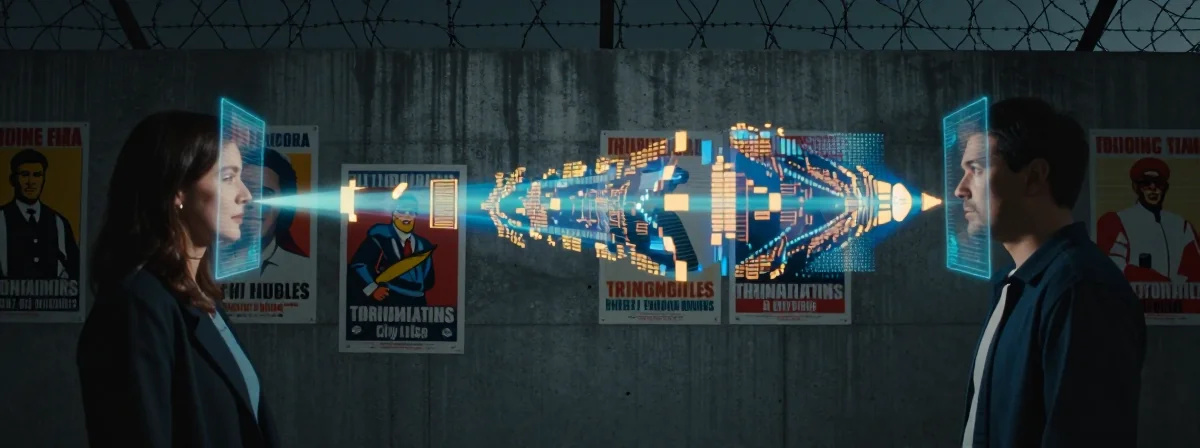
We often mistake proximity for connection, assuming that living next door means we understand our neighbors. In reality, the true barriers have never been physical borders, but the controlled narratives that prevent us from seeing the humanity on the other side. Technology is finally tearing down those walls, replacing suspicion with the raw, unfiltered data of human experience.
The Cutting Edge
- Technology is the ultimate shield against cultural erasure.

When conflicts arise, the first casualty is often history—the stories, the poetry, and the nuances of a civilization that existed long before the current geopolitical tension. But we live in an era where every poem, every architectural marvel, and every oral tradition can be digitized, decentralized, and preserved forever. You have the power to ensure that a civilization spanning millennia isn’t reduced to a headline on a news ticker. The cloud doesn’t just store data; it stores identity.
We are finally realizing the “global village” isn’t just a metaphor. We are floating on a space rock, connected by fiber optics and satellites, finally understanding that the “other side” is just a ping away.
The next great leap isn’t just AI—it’s AI-assisted discernment. It’s easy to look at the state of information warfare and despair, seeing only bots and brainwashing algorithms designed to polarize us. But look closer at the innovation happening in response: decentralized verification, open-source intelligence, and communities learning to audit their own feeds. We aren’t just passive consumers of propaganda anymore; we are developing the cognitive and technological tools to dismantle it. The same networks that spread lies are now being used to crowdsource the truth, creating a feedback loop that makes it harder for outdated narratives to survive.
- Direct communication bypasses the middlemen of hate.

For decades, the story of “us versus them” was curated by governments and media conglomerates with specific agendas to keep populations divided and compliant. Today, peer-to-peer communication allows you to look someone in the eye—digitally—and realize they want the exact same things you do: safety, dignity, and a future for their family. When you cut out the intermediary, you find that the hostility was never organic; it was manufactured. The internet is dismantling the infrastructure of hate, one conversation at a time.
- Innovation requires us to remember the deep past. We often get caught up in the rapid cycle of technological obsolescence, obsessed with what’s next, but true progress relies on understanding the deep data of human history. Civilizations that have endured for thousands of years possess a resilience and wisdom that our younger experiments are just starting to code for. By integrating that longevity with our modern capabilities, we aren’t just building faster chips; we’re building a more durable future.
Onward and Upward
The old models of conflict rely on ignorance and isolation, both of which are becoming impossible in a hyper-connected world. We are coding a future where empathy is as efficient as any algorithm, and where the truth travels faster than fear. Keep your eyes open; the signal is getting stronger than the noise.