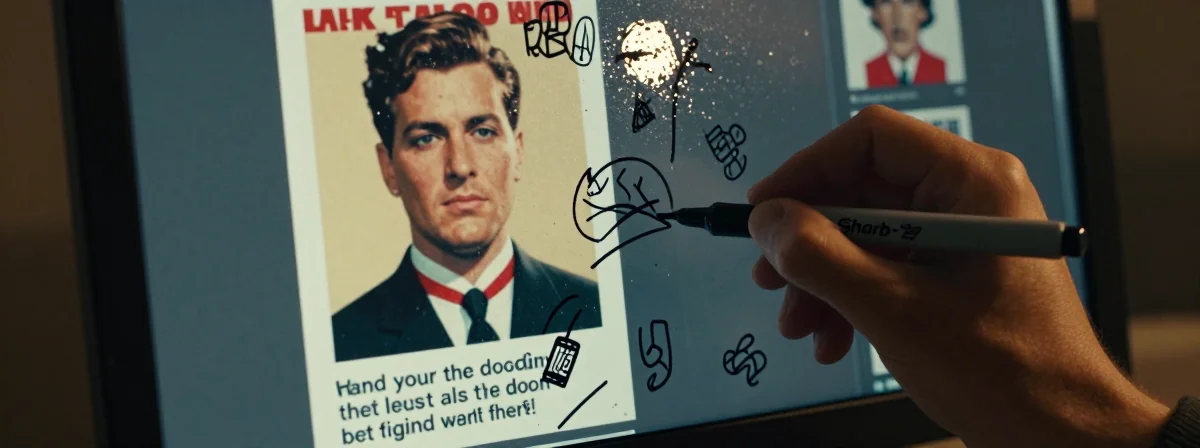
You saw the image. A crude, sharpie-style addition to a photo, a digital jab at political rivals and past scandals. It felt raw, almost like street art, the kind of thing a rogue protester with a marker might scrawl on a bathroom wall. But then you realized the source wasn’t a dissident with a Sharpie—it was a state media account using Photoshop to manufacture a moment.
We used to trust our eyes, but now the distinction between a physical edit and a digital one is meaningless. The tools for manipulation are democratized, and the propagandists are getting better at mimicking the chaos of the internet.
The Hidden Cost
The edit is the message, even if the ink is fake. It doesn’t matter if the marker was real or pixels; the intent was weaponized either way. State actors are learning that you don’t need a physical canvas to vandalize a narrative when you have a content team and a distribution network. They wanted the provocation without the paperwork, and they got it.
Stop looking for the good guys in a propaganda war. It is tempting to side with anyone attacking a system you dislike, but that impulse is a trap. Just because one side is fighting a monster doesn’t make them a hero.
Sometimes it’s just trash fighting garbage, and you’re standing in the middle holding the bag.
- Moral hypocrisy is now a feature, not a bug.
It is jarring to watch a regime with a dismal record on human rights attempt to take the moral high ground against Western corruption. They point fingers at distant islands and elite scandals to distract from their own systemic failures regarding women and children. It’s a calculated deflection, using your valid outrage about one thing to silence your scrutiny of another.
- Your algorithm is probably lying to you about who is suffering.
Technology creates a warped reality where a minority of loud, online voices drowns out the silent, terrified majority living through the reality. You see the viral edits and the diaspora arguments, but you miss the millions of people who are just trying to survive the blackout. The internet amplifies the extremes until the center disappears.
- Technology has accelerated the arms race of lies. It used to take weeks to plant a fake story in a foreign newspaper or print pamphlets for a resistance. Now, a single image can bypass verification entirely and land in your pocket before the truth even laces up its boots. We aren’t just consuming news anymore; we’re consuming a battlefield.
Proceed with Caution
You are consuming media that is designed to break your empathy, not inform you. Every time you share an outrage-bait edit, you are doing the work for the propagandists, amplifying a signal that was tuned to divide you. The next time you see something that perfectly confirms your biases about how evil the “other side” is, pause. It might be real, but it’s probably just another digital sharpie mark on a reality that is already messy enough.