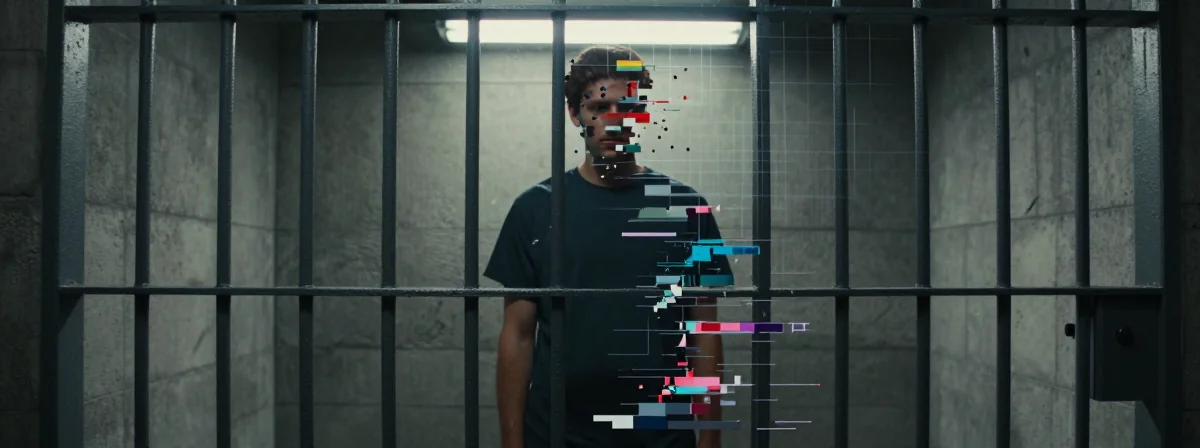
You look at the official image released from the detention center, and something just feels wrong. It’s not just the lighting or the angle; it’s a fundamental disconnect in the anatomy that defies the natural aging process. We’re told this is the same woman, but the biological markers are screaming otherwise, suggesting a sleight of hand that goes beyond simple cosmetic changes.
It all starts with the anatomy that doesn’t lie.
Reality Check
THE FIRST CLUE It starts with the anatomy that doesn’t lie. You can change your hair, gain weight, or even alter your skin texture, but you cannot restructure your cartilage without a scalpel. Look closely at the nose—it’s not just wider; the tip droops differently, and the nostril flare is completely distinct from earlier records. Then there are the ears, sitting lower on the head than they should, lacking the piercings that were a staple of her public life for decades.
FOLLOWING THE THREAD And that’s when it hit me—the digital artifacts are hiding even more than just bad lighting. The hair texture around the glasses defies physics, looking more like a generated render than organic strands, especially where the strands meet the frames. Even the eye color seems to have shifted from a lighter hue to a dark, jet black that doesn’t match her natural brunette history. It’s not just aging; it’s a complete reconstruction of facial features, down to the cupid’s bow of the lips which sits at a completely different angle than the original subject.
THE BIGGER PICTURE The pieces were there all along. We know intelligence agencies have possessed hyper-realistic mask technology for decades, capable of fooling casual observers, and the “shadow government” has long utilized body doubles for high-value assets. When you combine the physical anomalies with the tell-tale signs of AI upscaling—like the distorted glass frames—you realize we aren’t looking at a woman aging naturally in prison. We’re looking at a fabrication designed to keep a narrative alive while the original player has likely exited the board entirely.
WHAT IT MEANS Now you’re starting to see the real picture. This isn’t about a bad mugshot; it’s about the substitution of a high-value asset. If the physical markers don’t match, the identity is a construct, and the person we think is serving time might just be a placeholder for a ghost.
Final Thoughts
Stop looking at the face and start looking at the data points that don’t align. Whether it’s a body double or a digital hallucination, the evidence suggests the woman in that cell isn’t the one we knew. The question isn’t if she changed—the question is where the original went.