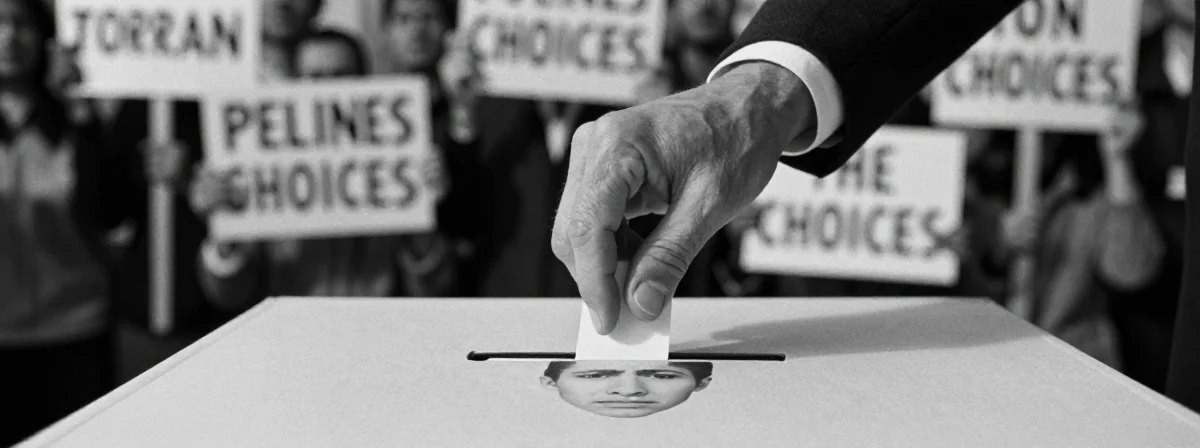
The ballot box stands as one of civilization’s most cherished symbols—a small wooden booth where ordinary citizens believe they hold the power to shape their nation’s destiny. Yet, as we watch political cycles repeat like broken records, with the same faces emerging victorious regardless of public sentiment, a disturbing question lingers in the air like unspoken truth: what if our votes aren’t the master key to change, but merely a carefully crafted illusion of participation?
For generations, we’ve been taught that voting is the cornerstone of democracy—the ultimate expression of civic duty. But what happens when this foundational belief begins to fray under the weight of evidence that suggests our electoral system might be less about representation and more about maintaining the status quo? The recent political landscape, with its carefully curated candidates and predictable outcomes, has left many feeling like spectators in a grand performance rather than active participants in governance.
Consider the curious case of the political spectrum, which appears to stretch infinitely from left to right, yet somehow manages to produce candidates who, once in office, converge toward the exact center of corporate interests. It’s as if we’re offered different flavors of the same ice cream—vanilla and chocolate, both sweetened with the same syrup of influence.
Does the Voting System Truly Reflect Our Will?
The paradox of our electoral system lies in its simultaneous importance and inefficacy. On one hand, the effort to suppress votes through gerrymandering, voter ID laws, and misinformation campaigns suggests that those in power recognize the potential threat of genuine democracy. If votes didn’t matter, why would there be such elaborate systems designed to manipulate electoral outcomes?
Yet, on the other hand, we witness political dynasties persist across generations, regardless of public approval. The same families and corporate interests seem to cycle through positions of power, like actors rotating through roles in the same play. This isn’t to say that individual votes have no value—they represent tiny ripples in an ocean of influence. But when these ripples consistently converge toward the same shores of established power, we must question whether the ocean itself isn’t being directed by unseen currents.
Imagine a garden where you’re given the choice between two types of fertilizer—both manufactured by the same company, both promising growth, yet both containing the same proprietary blend. No matter which you choose, the underlying composition remains unchanged. This is the essence of the political illusion we’ve been sold: the belief that our choice matters when the options themselves are controlled by the same forces.
Why Do We Keep Voting for the Same Outcomes?
The persistence of the two-party system, despite its demonstrable failure to address systemic issues, speaks to the power of conditioning. We’ve been taught to believe that voting for a third-party candidate is a wasted vote—a concession to the “lesser of two evils” that perpetuates the very duopoly we claim to oppose. This psychological trap, often referred to as the “lesser evil” dilemma, effectively narrows our choices to options that won’t disrupt the established order.
Consider the phenomenon of political advertising, which bombards us with carefully crafted images and soundbites designed to evoke emotional responses rather than inform rational decision-making. These campaigns aren’t merely about persuasion—they’re about creating a limited menu of acceptable choices, much like a restaurant that only serves dishes made from ingredients supplied by a single distributor.
The political theater we witness during election cycles—debates that avoid substantive issues, campaigns focused on personality rather than policy—serves to distract us from the deeper structures of power that remain untouched by electoral outcomes. Like spectators at a magic show, we’re directed to watch the magician’s hands while the real trick happens elsewhere.
What Happens When We Look Beyond the Ballot Box?
The limitations of electoral politics don’t negate the importance of collective action. History shows that meaningful change rarely emerges from ballot boxes alone. Rather, it springs from movements that organize outside the established political framework—strikes, boycotts, civil disobedience, and community organizing that creates alternative systems of power.
The most powerful tool we possess isn’t our vote—it’s our ability to withdraw consent from systems that don’t serve us. This doesn’t mean abandoning democracy, but rather expanding our understanding of what democracy truly means. True democracy isn’t confined to periodic elections; it’s expressed in the daily decisions we make about how we relate to one another, how we organize our communities, and how we distribute resources.
Consider the alternative models of governance that have emerged in various communities around the world—participatory budgeting processes, worker cooperatives, and direct democracy initiatives that demonstrate what’s possible when people organize from the ground up rather than waiting for permission from above.
Is the System Rigged, or Are We Just Not Playing It Right?
The question of whether the system is rigged isn’t as important as recognizing that any system of power will be manipulated by those who benefit from maintaining it. The more pertinent question is: how can we create systems that are resilient to manipulation? The answer lies not in perfecting the existing framework, but in developing parallel structures that operate on different principles.
Imagine a river that has been dammed and diverted to serve the interests of a few. Rather than fighting to control the existing dam, we might be better served by digging new channels that allow water to flow freely around the obstruction. This metaphor applies to our political situation—rather than struggling to reform a system that’s fundamentally designed to protect the interests of its controllers, we might focus our energy on creating alternative systems of power and decision-making.
The most subversive act we can commit isn’t voting against the establishment—it’s building alternatives to the establishment. This doesn’t require grand gestures or mass movements; it begins with the small decisions we make every day about how we spend our money, where we invest our time, and how we relate to one another in our communities.
What If Voting Isn’t About Choosing Leaders, But About Choosing Ourselves?
The true purpose of voting might not be to select representatives who will act on our behalf, but to practice the skills of collective decision-making that are essential to any functioning democracy. In this view, elections aren’t about choosing who will govern us, but about practicing the very act of self-governance that makes democracy possible.
Consider the ancient Greek model of democracy, where citizens were randomly selected to serve in governing bodies rather than elected through competitive campaigns. This approach recognized that governance isn’t a specialized skill to be entrusted to a select few, but a collective responsibility that belongs to everyone.
The modern electoral system, with its emphasis on professional politicians and expensive campaigns, has effectively removed governance from the hands of ordinary citizens and placed it in the hands of those who can afford to compete in this elaborate game. This isn’t necessarily a conspiracy—it’s the natural result of a system that values competition over cooperation, and specialization over participation.
How Can We Break Free From the Political Illusion?
Breaking free from the political illusion doesn’t require abandoning the electoral process, but rather expanding our understanding of what democracy can be. This begins with recognizing that our power isn’t confined to the ballot box—it extends to every interaction we have, every dollar we spend, and every relationship we build.
The most effective way to challenge the existing power structures isn’t through protest or revolution, but through the quiet work of building alternative systems that demonstrate what’s possible when people organize from the bottom up. This might involve creating local currencies, cooperatives, community gardens, or any number of initiatives that shift power from distant authorities to local communities.
The political awakening we’re witnessing isn’t about rejecting democracy—it’s about reclaiming it from those who have reduced it to a spectator sport. True democracy isn’t about choosing between candidates who represent different factions of the same establishment; it’s about creating systems where ordinary people have the power to make decisions that affect their lives.
What Does Real Political Power Actually Look Like?
Real political power isn’t about controlling others—it’s about creating the conditions where people can control their own lives. This doesn’t require overthrowing the existing system, but rather building new systems that operate on different principles. The most powerful political act isn’t voting—it’s participating in the creation of alternatives.
Consider the example of indigenous communities around the world, who have maintained systems of governance and resource management that have sustained their cultures for millennia. These systems aren’t perfect, but they demonstrate that alternatives to the dominant model of centralized, hierarchical power are possible and sustainable.
The political transformation we need isn’t about electing different representatives to the same institutions; it’s about creating new institutions that reflect our deepest values. This requires moving beyond the limited framework of electoral politics to engage in the more challenging work of building alternative systems of power and decision-making.
What If the Answer Wasn’t in the Ballot Box at All?
The most subversive political act we can commit isn’t voting against the establishment—it’s building alternatives to the establishment. This doesn’t require grand gestures or mass movements; it begins with the small decisions we make every day about how we relate to one another, how we organize our communities, and how we distribute resources.
The political awakening we’re witnessing isn’t about rejecting democracy—it’s about reclaiming it from those who have reduced it to a spectator sport. True democracy isn’t about choosing between candidates who represent different factions of the same establishment; it’s about creating systems where ordinary people have the power to make decisions that affect their lives.
The future of democracy doesn’t lie in perfecting the existing electoral system, but in expanding our understanding of what democracy can be. This begins with recognizing that our power isn’t confined to the ballot box—it extends to every interaction we have, every dollar we spend, and every relationship we build.
The most profound political transformation isn’t about changing who occupies positions of power, but about changing how power itself is organized. This requires moving beyond the limited framework of electoral politics to engage in the more challenging work of building alternative systems that reflect our deepest values and aspirations.