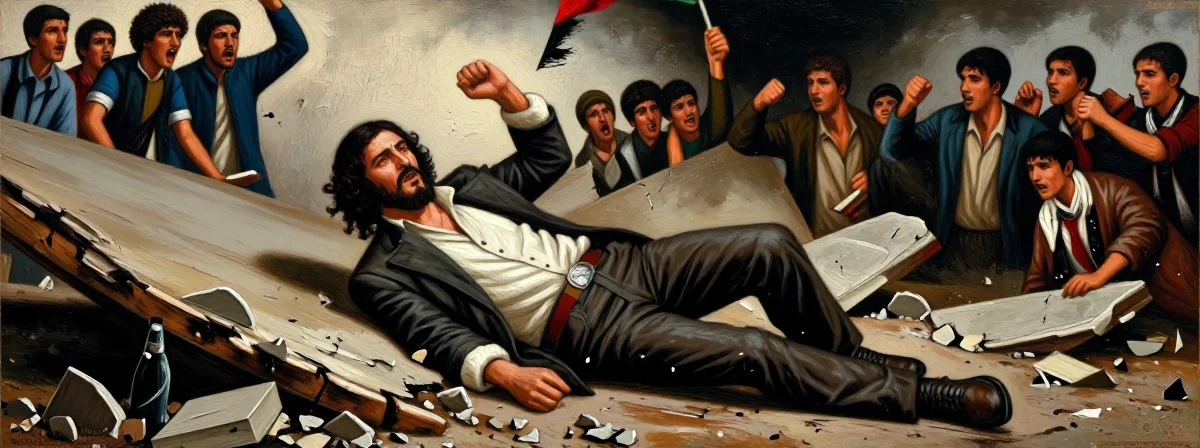
Some events in history are like shadows—visible but never fully understood. The death of Muammar Gaddafi is one such shadow. We’ve all seen the grainy footage, heard the official narratives, and moved on. But what if the story we’ve been told is only half the truth? What if Gaddafi’s fate wasn’t just about a dictator’s end, but a warning about the forces that shape our world?
The media painted Gaddafi as a villain—a brutal autocrat who deserved his fate. But beneath the surface lies a story of ambition, resistance, and a collision with powers far greater than Libya itself. Was he truly the monster we were told, or was he a leader who dared to challenge the status quo—and paid the ultimate price?
The answers aren’t simple, but they’re worth exploring. Let’s peel back the layers of propaganda and see what remains.
Was Gaddafi Really the Villain the West Made Him Out To Be?
History is often written by the victors, and in Gaddafi’s case, the victors were the Western powers that ultimately brought him down. The narrative we’re fed— Lockerbie, terrorism, human rights abuses—paints a damning picture. But what if it’s incomplete?
In Libya itself, Gaddafi was seen by many as a liberator. He nationalized oil, provided free housing and healthcare, and even dared to dream of uniting Africa under a single currency backed by gold. To his supporters, he wasn’t a dictator but a visionary. They celebrated him like a hero, not a villain.
Consider this: When Gaddafi was killed, the celebrations in the West were loud and unambiguous. But in parts of Africa, the reaction was different. Some saw it as a betrayal—not just of Libya, but of a dream of African independence. The media blackout on these perspectives isn’t an accident. It’s a deliberate effort to control the story.
Power doesn’t just want to win—it wants you to believe its version of the truth.
The Gold Dinar: A Threat to Global Banking?
Gaddafi’s most audacious idea was the African gold dinar. He envisioned a continent-wide currency, backed by the gold reserves of African nations, free from the influence of Western banks. To the Rothschilds, the Federal Reserve, and the global financial elite, this was a direct threat.
Imagine a world where Africa could trade without relying on the dollar or the euro. It would disrupt the entire global financial system—one built on debt and control. Gaddafi wasn’t just challenging Libya’s place in the world; he was challenging the foundation of Western economic dominance.
This isn’t conspiracy theory territory—it’s economic reality. When countries try to break free from the dollar’s grip, they face consequences. Saddam Hussein’s decision to trade oil in euros (not dollars) preceded his downfall. Now, Gaddafi’s push for a gold-backed currency did the same.
The message is clear: You can’t challenge the financial order and expect to live.
Lincoln, Kennedy, and the Long History of Leaders Who Defied Banking Powers
Gaddafi wasn’t the first leader to clash with the forces of global finance. History is littered with examples of those who dared to challenge the banking establishment—and paid the price.
Abraham Lincoln, for instance, issued the Greenback—a currency not backed by gold but by the government’s credit. He knew it would anger the bankers, and his assassination shortly after is no coincidence. John F. Kennedy signed Executive Order 11110, which aimed to strip the Federal Reserve of its power to issue currency. He was dead within months.
Gaddafi’s story fits this pattern. He wasn’t just a dictator—he was a symbol of resistance. And like those before him, he learned the hard way that some battles are unwinnable.
The question isn’t whether these leaders were perfect. It’s whether their assassinations were about justice or control.
The Media’s Role: Manufacturing Consent and Memory
We live in an age of manufactured narratives. The media doesn’t just report events—it shapes them. Gaddafi’s demonization wasn’t organic; it was engineered.
Think about how quickly public opinion turned against him. One day, he’s a peacemaker; the next, he’s a monster. The media didn’t just report his actions—they framed them in a way that made intervention seem inevitable.
This isn’t new. During the Vietnam War, the media’s portrayal of Ho Chi Minh as a ruthless dictator justified decades of conflict. Today, we see the same tactics used against leaders who challenge Western interests.
The lesson? Don’t trust the headlines. Look for the patterns. When a leader is suddenly vilified, ask: Who benefits?
The Aftermath: Libya’s Broken Dream
Gaddafi’s death didn’t bring peace to Libya. Instead, it unleashed chaos. The country descended into civil war, human trafficking, and foreign interference. The same forces that cheered his demise now struggle to contain the mess they helped create.
This is the paradox of intervention. We’re told it’s for the greater good, but the results are often worse than the original problem. Iraq, Afghanistan, Syria—the list goes on. Each time, the promise of liberation is followed by a descent into violence.
Gaddafi’s fate wasn’t just a personal tragedy; it was a cautionary tale. It shows what happens when the powerful decide to reshape the world in their image.
Beyond Propaganda: What Can We Learn From Gaddafi’s Story?
The story of Gaddafi isn’t just about one man. It’s about the forces that shape our world—power, money, and the narratives that justify both.
We’re taught to see history in black and white: heroes and villains, good and evil. But the truth is messier. Gaddafi was a complex figure, and so are the forces that brought him down.
The real lesson isn’t to romanticize him. It’s to question the stories we’re told. To recognize that behind every headline, there’s a power struggle. And to understand that some of the greatest threats to humanity aren’t the dictators we’re shown—but the invisible hands that pull the strings.
The next time you hear a story of a “villain” being brought to justice, pause. Ask: Who benefits? And what are they not telling me?
Because the answers might just change everything.