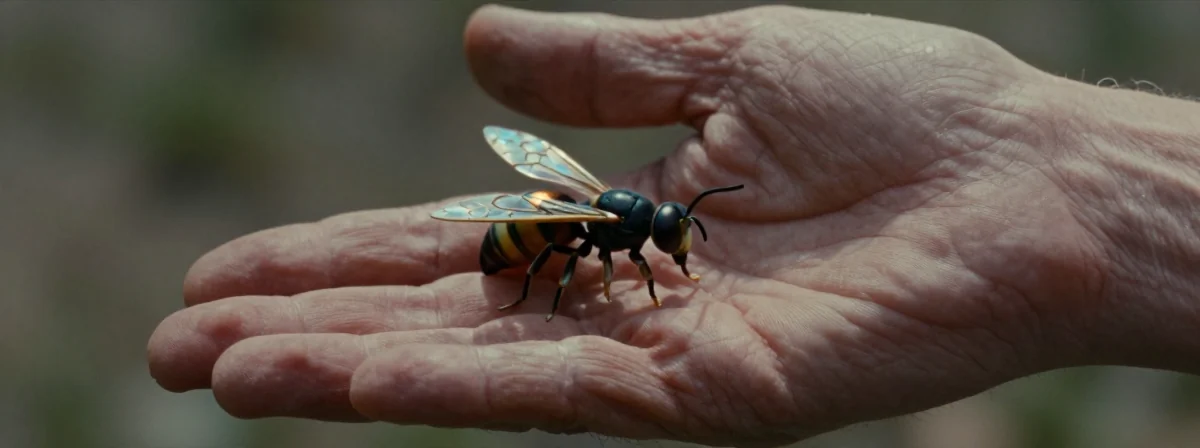
When was the last time you felt something that defied explanation? Not just a coincidence, but a clear intervention that left an indelible mark on your memory. For me, it was the day I was five years old, playing by a creek in my backyard, when something extraordinary happened that still makes my blood run cold with clarity decades later.
That summer afternoon began like any other. The sun was warm, the creek was shallow, and I was exploring the rocks that bordered our property. Then came the wasp—suddenly, aggressively chasing me toward the creek. My only escape route was across slippery rocks, and as I stumbled, something happened that no five-year-old should logically remember with such precision.
What Happens When You’re Five And Something Grabs Your Foot?
Children’s memories are often dismissed as unreliable, but some experiences burn themselves into your consciousness. Mine was a wasp attack that should have ended badly, but didn’t. As I slipped on that perpetually wet rock—the one I knew was treacherous—the world seemed to slow down. A hand appeared, not from my mother who was inside, not from my brother who was elsewhere, but seemingly from nowhere.
The touch wasn’t alarming. It was calm, deliberate, and completely out of context. I could feel fingers and thumb steadying my right foot, preventing a fall that would have put me directly in the path of the wasp. In that same instant, the wasp—which had been hovering just feet away—performed an unnatural 180-degree turn and flew away, abandoning its chase. Wasp behavior doesn’t typically include sudden retreats when they’ve cornered prey.
This wasn’t the first time something unusual had happened at that house. My family later told me about other occurrences—unexplained noises, objects moving, feelings of being watched—that seemed to center around my brother and me. It makes me wonder if whatever presence was there that day wasn’t just passively observing, but actively intervening.
Why Do We Remember the Impossible So Clearly?
The human brain is remarkable at filtering reality, but sometimes it captures things that don’t fit our understanding of the world. Children, with their less developed critical faculties, might be more attuned to these phenomena. My memory of that hand isn’t fuzzy or imagined; it’s sharp, tactile, and complete with the feeling of individual digits wrapping around my foot.
What’s particularly striking is how these experiences often come with a sense of normalcy within their context. I didn’t think “this is paranormal” at the time—I just registered the sensation and the wasp’s abrupt departure as part of the immediate crisis. It’s only in retrospect that the impossibility of the situation becomes clear.
Research into childhood paranormal experiences suggests these aren’t simply misremembered events. Children consistently report similar patterns of protective interventions during moments of danger or distress. These aren’t grand, supernatural displays but quiet, practical interventions that prevent harm without drawing attention to themselves.
Could It Be Something More Than Coincidence?
Statistically speaking, the timing of that hand appearing as I slipped, combined with the wasp’s unusual behavior, defies probability. The odds of both events happening simultaneously by chance are astronomically low. Yet when we consider the broader context—other reported phenomena at the house, the protective nature of the intervention—it begins to look less like random chance and more like purposeful action.
What’s fascinating is how these experiences often manifest during childhood. Is it that children are more open to these interactions? Or that these entities prefer to interact during formative years? The evidence suggests children are more likely to report and remember these encounters, possibly because their developing brains haven’t yet constructed the rigid boundaries of “reality” that adults maintain.
The feeling that accompanied the touch—that sense of calm rather than alarm—adds another layer to the experience. It wasn’t a startling intervention but a reassuring one, as if whatever was there understood my fear and responded with gentle guidance rather than dramatic rescue.
What Do These Experiences Tell Us About Our World?
If we’re willing to consider that these experiences might be real, what does that say about our understanding of reality? The hand that saved me wasn’t visible to anyone else, left no physical trace, yet its effect was undeniably real. This challenges our binary view of the world—either something happened physically, or it didn’t.
These experiences suggest a more nuanced reality where physical and non-physical interactions can occur simultaneously. The wasp, a physical creature, behaved unnaturally in response to something non-physical intervening in my physical danger. Both events were real, both had physical consequences, yet only one had a conventional explanation.
The consistency of these accounts across different people and cultures points to something more than individual delusion. Whether we call it guardian spirits, protective energies, or something else entirely, the pattern of intervention during childhood moments of danger is too consistent to dismiss entirely as coincidence or imagination.
Why Do We Resist Believing These Experiences?
Our culture heavily conditions us to explain everything through conventional means. When faced with an experience that defies explanation, we’re taught to look for rational alternatives, to question our own perceptions, to dismiss what we can’t measure. This is particularly true for childhood memories, which are often written off as fantasy or misremembering.
But what if these dismissals are precisely what prevents us from understanding these phenomena? By automatically filtering out experiences that don’t fit our worldview, we may be missing something fundamental about how the world works and how we’re connected to it.
The resistance isn’t just cultural—it’s deeply personal. Believing in these experiences requires opening ourselves to possibilities that challenge our sense of security in a predictable, understandable world. It’s easier to maintain that nothing unusual happened than to confront the implications of something that did.
How Can We Approach These Experiences More Openly?
If we’re to take these experiences seriously, we need to develop methods for evaluating them that don’t immediately default to dismissal. This means acknowledging the reality of the experience to the person who had it, even while we work to understand what might have happened.
Consider the physical sensations—these aren’t just mental constructs. The feeling of fingers on my foot was as real as any physical touch. The relief when the wasp flew away was palpable. These aren’t abstract concepts but concrete experiences with real emotional and physical components.
We might also consider the timing and context. These interventions typically occur during moments of genuine need, not during casual moments. They’re purposeful, not random. This pattern suggests a responsive quality to these experiences, not just passive occurrences.
What’s the Takeaway From These Unexplained Interventions?
The hand that saved me from that wasp attack wasn’t just a childhood memory—it was a revelation about the nature of reality and protection. It taught me that help can come from unexpected places, that safety can manifest in ways we don’t understand, and that our memories of these events contain valuable information about what’s possible.
These experiences, whether we call them paranormal, spiritual, or something else, challenge us to expand our understanding of protection and guidance. They suggest that we’re not as alone as we sometimes feel, and that help can come when we need it most, even if we can’t see the source.
Ultimately, the hand that steadied my foot that day didn’t just prevent a painful sting—it introduced me to the possibility that something unseen was watching over me, ready to intervene when needed. And that realization, more than the memory itself, has been the true gift of that childhood experience.