
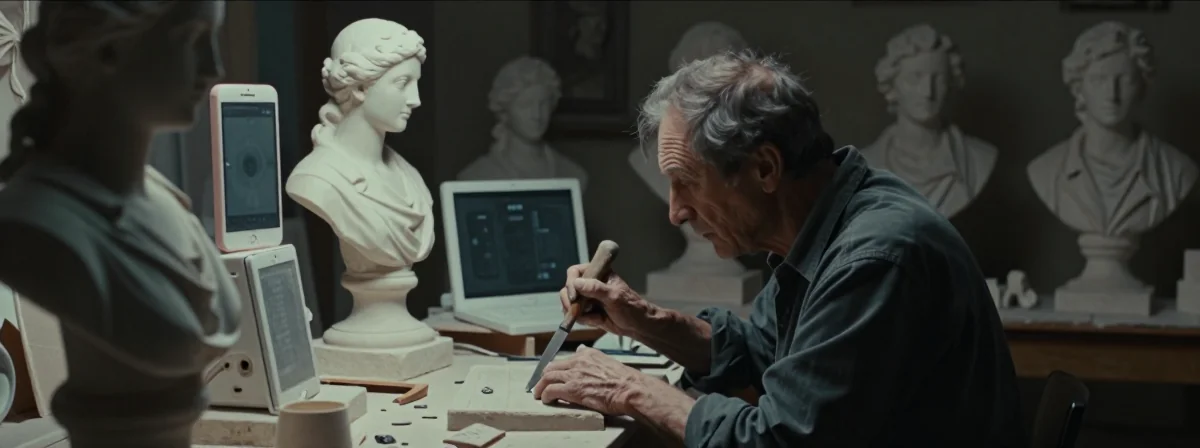
Ever wonder why modern life feels like a race between human connection and machine efficiency? Jacob Epstein, a British sculptor from the early 20th century, saw it coming. His work wasn’t just art—it was a warning. Before smartphones and AI dominated our lives, Epstein was carving sculptures that questioned whether technology would save us or destroy us. And the parallels to today are chilling.
His 1913 piece “Rock Drill” (depicting a mechanical soldier) wasn’t just avant-garde; it was a prophecy. Epstein initially celebrated the industrial age, but World War I shattered his optimism. The same machines he once admired became tools of mass destruction. Sound familiar? Today, we’re trading human depth for algorithmic convenience—just as Epstein feared.
The Vorticist movement, which Epstein helped pioneer, wasn’t just about abstract shapes. It was a rebellion against Victorian-era prettiness, embracing the raw power of machinery. But Epstein’s later work turned critical. He saw technology as a force that could enslave humanity—echoing today’s debates about surveillance, automation, and digital addiction.
Why Did Epstein Fall Off Our Radar?
For decades, Epstein’s warnings were buried under later art movements. But his work is more relevant than ever. Consider how his sculptures critique the “glorification of the machine.” In “Rock Drill,” the human figure is secondary to the machine—it’s a metaphor for how we now prioritize screens over souls.
The irony? Epstein was ahead of his time. Today, we’re living his nightmare. Social media platforms design apps to hook us, corporations automate jobs, and we measure success by productivity metrics—not human flourishing. Epstein saw this disconnect coming. His 1914 sculpture “The Rock Drill: The Angel of the Machine” even included a fragile human form being overtaken by metal.
How Epstein’s Vision Still Resonates
Epstein wasn’t just an artist; he was a cultural diagnostician. His work predicted three modern crises:
- The Dehumanization of Labor: Epstein’s industrial sculptures show workers as cogs in a machine—just as today’s gig economy treats people as disposable.

- The Glamorization of War: His post-WWI pieces depict machinery as monstrous, foreshadowing how we now normalize endless conflict through tech.
- The Loss of Aesthetic Depth: Epstein criticized the “ugliness” of industrial design, something we still grapple with in our minimalist-but-soulless tech products.

Take his 1915 “Head of a Chorus Girl.” It’s not just a portrait—it’s a critique of how art was becoming mechanized, just as today’s AI-generated art raises questions about authenticity. Epstein’s work forces us to ask: What do we lose when we let technology define beauty?
The Unspoken Lesson of Epstein’s Work
Epstein’s journey from celebrator to critic of technology isn’t just historical—it’s a roadmap for today. He reminds us that progress isn’t automatic good. His sculptures urge us to look beyond the shiny surfaces of innovation and ask: At what cost?
Today, we’re drowning in “efficiency” but starving for meaning. Epstein’s work is a call to rehumanize our relationship with technology. His art wasn’t just about metal and motion; it was about power dynamics, human dignity, and the thin line between creation and destruction.
The next time you mindlessly scroll through your feed, remember Epstein’s warnings. His sculptures weren’t just ahead of their time—they were ahead of ours. The question is: Will we listen this time?