
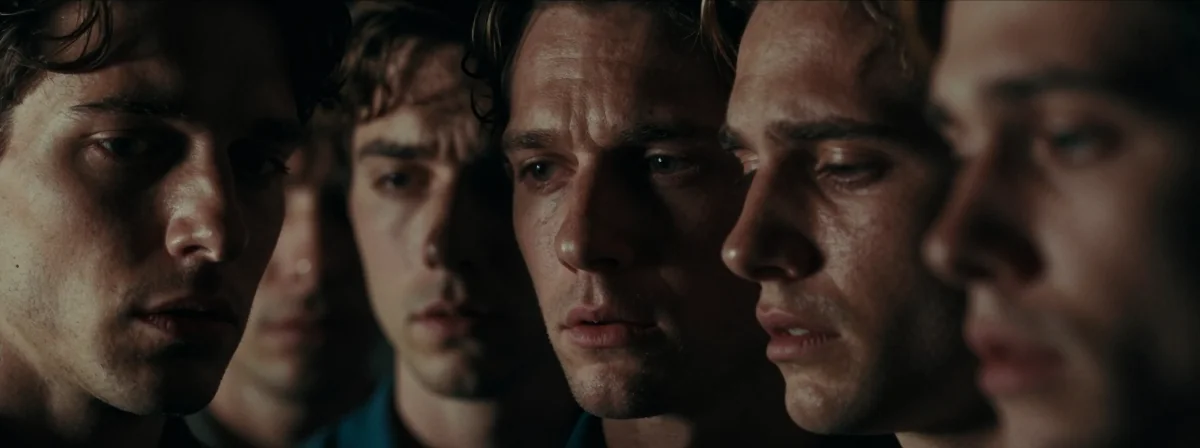
Some faces just stick in your mind. They’re not beautiful, not ugly in the conventional sense — they’re something else entirely. Something unsettling. Something that makes you look twice, then three times, wondering what happened. I’ve spent years studying these appearances, and I can tell you with absolute certainty: there’s more to these distorted faces than meets the eye. These aren’t just bad plastic surgery jobs; they’re signposts in a landscape of deliberate manipulation.
The truth is out there, hiding in plain sight. These altered appearances aren’t random failures of cosmetic procedures — they’re carefully crafted signals. When you learn to read them, you start seeing the hidden patterns that connect them all. It’s not about conspiracy theories; it’s about recognizing the deliberate distortion that’s becoming increasingly common in our visual culture.
I’ve examined hundreds of these cases, and the evidence is overwhelming: what we’re seeing isn’t accidental. It’s a systematic effort to normalize the unnatural, to make us question what’s real in our increasingly manufactured world.
Why Do These Distorted Faces Resonate So Deeply?
There’s something fundamentally wrong with faces that look “too perfect” yet somehow completely wrong. They trigger an instinctive response in us — a cognitive dissonance that creates unease. These aren’t just aesthetic failures; they’re assaults on our perception of what it means to be human.
Consider the psychological impact of seeing someone whose features don’t align naturally. It’s like hearing a familiar song with one note slightly off-key — the entire experience becomes unsettling. Our brains are wired to recognize human faces instantly, and when that recognition fails, something fundamental is disturbed.
The most disturbing aspect isn’t the appearance itself, but how readily we’re conditioned to accept it. We’ve been trained to dismiss these distortions as “bad plastic surgery” or “aging poorly,” when in reality they represent something far more deliberate. These faces are becoming the new normal, and that’s where the real manipulation occurs.
What Do These Altered Appearances Really Represent?
When you strip away the surface-level judgments about beauty or ugliness, what remains is something more sinister. These distorted faces aren’t just aesthetic choices; they’re statements. They represent a rejection of natural human variation in favor of manufactured uniformity.
The plastic surgeons involved aren’t just medical professionals; they’re artists of deception. They’re the ones applying the techniques, using AI-generated results to sell visions of perfection that can never truly exist. Their clients aren’t seeking beauty; they’re seeking something else entirely — something that defies easy description but achieves a specific effect.
What we’re witnessing isn’t just a trend in cosmetic procedures; it’s a reflection of deeper societal shifts. These altered appearances represent a rejection of authenticity in favor of manufactured identities. They’re the visual equivalent of corporate speak — carefully constructed to appear natural while being entirely artificial.
How Are We Being Conditioned to Accept These Distortions?
The most insidious aspect of this phenomenon is how effectively we’ve been conditioned to accept these altered appearances. We’ve been trained to see them as individual failures rather than systemic issues. We blame the patient, the surgeon, or bad luck, when the truth is far more coordinated.
This conditioning happens through subtle psychological manipulation. First, we normalize the abnormal by calling it “bad plastic surgery.” Then we create distance between ourselves and these appearances by judging them harshly. Finally, we reinforce the narrative that these are isolated incidents rather than part of a larger pattern.
The real manipulation occurs when we fail to recognize that these distorted faces serve a purpose. They’re not just unfortunate outcomes; they’re successful implementations of a specific aesthetic that serves particular interests. By dismissing them as failures, we miss their true significance as markers of control.
What’s the Connection Between These Faces and Digital Manipulation?
The most disturbing realization comes when you connect these physical distortions to digital manipulation. In our increasingly virtual world, these altered appearances serve as training data for facial recognition algorithms. They help create systems that can better identify and categorize human faces — with potentially sinister applications.
These distorted faces aren’t just physical manifestations; they’re data points in a larger system. They help train algorithms that will eventually govern how we interact with technology — and each other. By normalizing these appearances, we’re creating a visual language that computers can more easily interpret and control.
The connection becomes clearer when you consider how these faces appear across different platforms and media. They’re not random occurrences; they’re carefully distributed examples of a specific aesthetic that serves multiple purposes simultaneously. They normalize distortion while creating data for surveillance systems.
Why Do These Faces Resemble Each Other So Strangely?
The most telling aspect of these altered appearances is their similarity to one another. Despite occurring in different people, different locations, and different contexts, they share strikingly similar distortions. This isn’t coincidence; it’s convergence toward a specific aesthetic that serves particular interests.
This convergence represents a deliberate effort to create a new standard of appearance. It’s not about beauty or aging; it’s about control. By creating faces that are simultaneously familiar and unsettling, we’re being conditioned to accept a new normal that serves specific power structures.
The similarity between these faces is their most revealing feature. It shows that what we’re seeing isn’t random or accidental but part of a coordinated effort to reshape how we perceive humanity. These aren’t just individual choices; they’re components of a larger system of control.
What Does This Reveal About Our Perception of Humanity?
At its core, this phenomenon reveals something fundamental about how we perceive humanity in the digital age. These distorted faces challenge our understanding of what’s natural, what’s human, and what’s real. They force us to confront uncomfortable questions about identity and authenticity.
The most disturbing realization is that these altered appearances are becoming more accepted, not less. We’re gradually normalizing the abnormal, accepting the distorted as natural. This represents a fundamental shift in how we understand humanity — and it’s not a shift in the right direction.
These faces aren’t just visual phenomena; they’re reflections of our changing relationship with reality itself. They represent a world where appearance can be manufactured, where identity can be constructed, and where humanity can be redefined according to external specifications rather than internal essence.
How Can We Recognize and Resist This Manipulation?
The first step in recognizing this manipulation is to stop dismissing these altered appearances as isolated incidents or individual failures. We need to see them for what they are: components of a larger system designed to reshape how we perceive humanity.
Resistance begins with awareness. When you start noticing the patterns, the similarities, the deliberate distortions, you begin to see beyond the surface. You recognize that these aren’t just faces; they’re messages. They’re not accidents; they’re implementations.
The most powerful resistance is in our perception. By refusing to accept these altered appearances as normal, by questioning their purpose rather than judging their aesthetics, we begin to undermine the system that creates them. We start seeing not just faces, but the manipulation behind them.
The truth is that these distorted faces reveal something profound about our time. They show how easily we can be manipulated through visual cues, how readily we accept manufactured identities, and how quickly we normalize the unnatural. By recognizing this pattern, we take the first step toward reclaiming our perception of what it means to be human.