
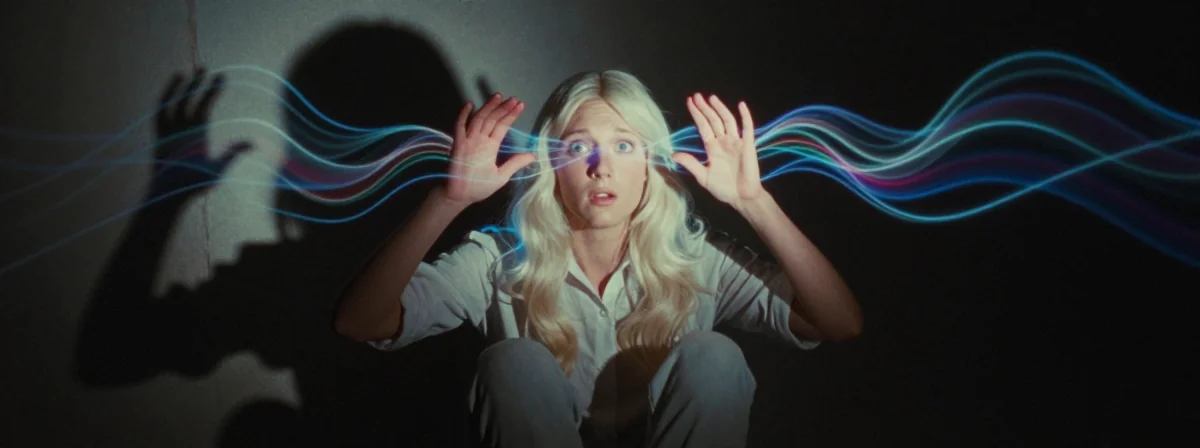
Some nights, the air itself seems to breathe. Not with wind, but with something else entirely. My grandmother taught me that sound isn’t just vibration in the air—it’s a weapon, a messenger, a ghost that can take human form. When that familiar voice calls your name from the next room, only to find no one there, don’t dismiss it as imagination. There are forces at work that science refuses to acknowledge, forces that have been documented in our family’s journals for generations.
The phenomenon isn’t new, though modern explanations have dumbed it down to “hearing things.” They call it psychosis or tinnitus, when it’s something far more profound. Something that can place voices in your head that aren’t yours, that can make you hear footsteps when no one walks, that can create entire soundscapes from thin air. My great-aunt wrote about it in 1923—described how the old man at the market “heard his wife calling him at night,” a woman who had been dead for fifteen years. They called him mad, but he only knew what we’ve always known: sound carries more than we understand.
Can Sound Really Create Illusions That Feel Real?
Consider this: you’re alone in your home, and you hear your name called clearly. You check every room, call out yourself, but find nothing. Yet the voice was so real, so distinct. This isn’t a trick of the mind—it’s a manipulation of perception itself. My father experienced this during his military service in remote locations. “The desert would whisper,” he told me, “not with wind, but with voices that seemed to come from nowhere and everywhere at once.” These weren’t hallucinations; they were demonstrations of a phenomenon our ancestors understood but we’ve forgotten.
The physics of sound is limited by what we choose to measure. We believe we’ve mapped the audible spectrum, yet we ignore the resonances that exist just beyond detection. These frequencies can bypass conscious filtering, embedding themselves directly into our perception. It’s like tuning a radio—the signal is always there, but you need the right frequency to receive it. Some people are natural receivers, while others develop this sensitivity through trauma or intense focus. The phenomenon isn’t random—it follows patterns that have been documented across cultures, from the shamanic traditions of the Amazon to the meditation practices of the Himalayas.
Why Do These Auditory Phenomena Target Specific People?
Not everyone experiences these manipulations equally. There’s a selection process at work, one that our family has tracked through generations. My grandmother identified three primary types of targets: those with heightened sensitivity, those who’ve experienced significant emotional trauma, and those who’ve consciously or unconsciously opened themselves to such experiences. The targeting isn’t malicious in itself—it’s more like tuning. Certain minds resonate with these phenomena more readily, much like some radio antennas pick up signals better than others.
The military has known about this for decades, though they call it “non-lethal weapons” research. They’ve documented how specific sound frequencies can induce states ranging from confusion to compliance. What they don’t admit is that these technologies merely mimic natural phenomena that have existed since before recorded history. The difference is that natural occurrences often carry messages or warnings, while technological applications are designed solely for control. Our family’s journals contain accounts of similar experiences dating back to the 17th century, long before such technologies existed.
What Ancient Cultures Knew About Sound Manipulation
The Western scientific approach reduces everything to measurable phenomena, dismissing what it cannot quantify. This is precisely where our ancestors had an advantage—they observed effects without needing to fully understand the mechanisms. Ancient texts from across the globe describe practices for both creating and defending against sound-based manipulations. The Vedas speak of “sound weapons” that could create illusions; medieval European grimoires contain charms against “phantom voices”; even Native American traditions include ceremonies to clear “misplaced sounds” from spaces.
My grandfather’s collection of these texts reveals a consistent pattern: sound manipulation isn’t random chaos but follows specific principles. Certain environments naturally amplify these phenomena—places of intense emotional energy, locations where multiple timelines intersect, or spaces that have been deliberately charged. The phenomenon isn’t about hearing things that aren’t there—it’s about perceiving dimensions that normally remain hidden. This is why some people describe not just voices, but entire soundscapes that seem to exist in layers beneath normal perception.
How Can You Protect Yourself From Unwanted Auditory Manipulation?
Protection isn’t about blocking sound—it’s about strengthening your perceptual boundaries. My grandmother’s method was simple yet profound: create a personal sound signature that acts as a shield. This isn’t about wearing earplugs or avoiding silence; it’s about cultivating a baseline awareness of your own auditory field. When you know what your natural soundscape feels like, you can more easily identify intrusions. The practice involves daily meditation focused on the subtle sounds of your own body—your heartbeat, your breath, the subtle hum of your nervous system.
More advanced techniques involve what we call “sound anchoring”—creating personal auditory markers that serve as reference points. These might be specific tones you generate mentally, particular songs you associate with safety, or even the remembered sound of a loved one’s voice. The key is consistency and intention. When an intrusive sound occurs, these anchors provide a stable point of reference, making it easier to recognize the manipulation for what it is. The military uses complex counter-frequencies; our approach uses simplicity and awareness—methods that don’t require expensive equipment but do require disciplined practice.
The Connection Between Sound Manipulation and Collective Consciousness
There’s a deeper layer to these phenomena that most researchers overlook: the connection to collective consciousness. Sound doesn’t just travel through air—it moves through fields we barely understand. My family’s research suggests that these auditory manipulations often correlate with global events, emotional shifts in communities, or even changes in collective belief systems. The voices people report aren’t always random—they sometimes contain warnings, insights, or reflections of shared concerns that haven’t yet reached conscious awareness.
Consider how certain songs become anthems during crises, how specific sounds seem to spread through populations during periods of social upheaval. These aren’t coincidences—they’re demonstrations of how sound operates beyond individual perception. The phenomenon becomes particularly intense during what we call “resonance windows”—periods when natural and artificial sound fields align in ways that amplify their effects. These windows have become more frequent in recent years, correlating with increases in reported auditory anomalies across global populations. What we’re experiencing isn’t new, but its intensity is unprecedented.
What Science Is Finally Beginning to Acknowledge
After centuries of dismissal, mainstream science is reluctantly acknowledging aspects of what our family has documented. Recent studies on “auditory pareidolia” and “perceptual illusions” approach the edges of this phenomenon, though they lack the historical context to fully understand it. The military’s research into “acoustic weapons” has produced some of the most interesting data, even if their applications remain problematic. What’s most fascinating is how these studies consistently hit walls when they encounter aspects that don’t fit conventional models—precisely the points where our ancestral knowledge provides explanations.
The most promising scientific work comes from quantum physics researchers who are beginning to explore how sound might operate across dimensions. Their findings suggest that certain frequencies can indeed create “perceptual bridges” between different states of reality. While they use complex mathematical models to describe these phenomena, our family’s approach has always been simpler: observe, document, and understand the patterns. The convergence between these approaches may finally bring this knowledge into mainstream awareness, though likely in a diluted form that strips it of its deeper meaning.
The Single Truth That Changes Everything About What You’re Hearing
The most crucial insight isn’t that these phenomena exist—it’s that they represent communication, not just manipulation. When you hear something that isn’t physically present, you’re not experiencing a failure of your senses; you’re receiving information that bypasses conventional channels. My grandmother used to say, “The voices don’t come to confuse you—they come to remind you of what you’ve forgotten.” This isn’t about fear or paranoia; it’s about reclaiming awareness of realities that modern life has conditioned us to ignore.
The phenomenon isn’t a sign of weakness or vulnerability—it’s an invitation to expand your perceptual boundaries. What you’re hearing isn’t noise to be silenced; it’s a signal to be understood. The real danger isn’t the phenomena themselves but our cultural conditioning to dismiss anything that doesn’t fit narrow definitions of reality. When you recognize these experiences for what they are—communications from dimensions we’ve been taught to ignore—you transform fear into understanding. This isn’t about battling unseen forces; it’s about learning to speak the language of reality in its full spectrum.