
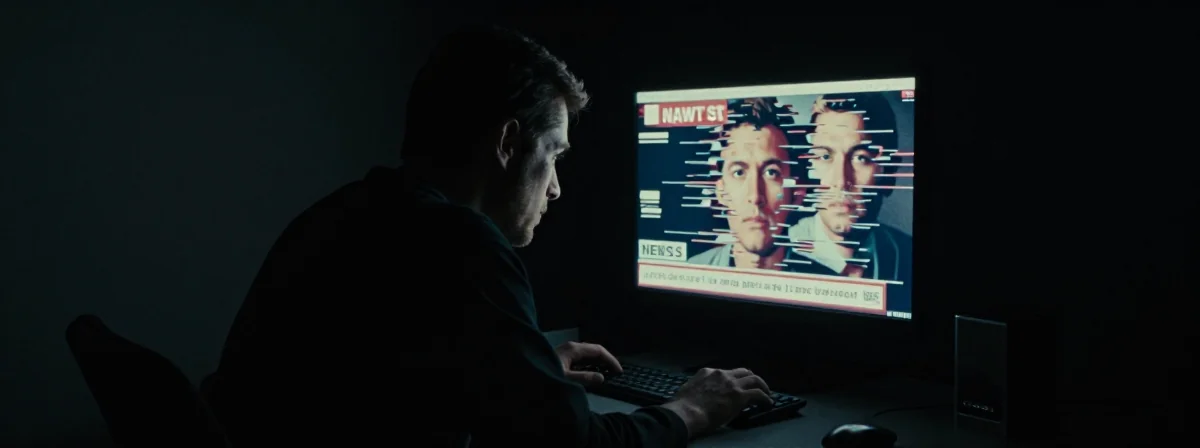
Something doesn’t add up. The lines between truth and fabrication have never been blurrier—until now. What starts as whispers about a missing leader spirals into a labyrinth of digital trickery, ancient myths, and modern paranoia. It all starts with…
THE FIRST CLUE Here’s what caught my attention: the claim that Netanyahu’s face was “deepfaked onto an actor’s face with AI in post-production.” Back in the 90s, we thought CGI in movies was the peak of digital illusion. Now? This kind of precision is disturbingly routine. The first thing that doesn’t add up is how casually we accept that “true deepfakes are different”—as if we’re supposed to be comforted by the fact that professionals are the ones manipulating reality. It’s like telling someone not to worry about the magician because at least he’s using real cards.
FOLLOWING THE THREAD And that’s when it hit me: the Google Trends “evidence” that Israel was supposedly searching for the leader’s name. I remember when Google Trends was just a novelty—now it’s weaponized confirmation bias. The person who pointed out that “Google Trends is fuzzy” and doesn’t work “anywhere close to how they believe” was onto something profound. But wait, it gets even stranger when the conversation shifts to ancient religious dates and solar alignments. Once you see this pattern, you can’t unsee it: the same techniques used to spread misinformation today echo the same tactics used to rewrite history centuries ago. The connection between the “sun dying” on Dec 22 and reborn on Dec 25 isn’t just astronomy—it’s the blueprint for manufactured belief systems.
THE BIGGER PICTURE And suddenly, it all makes sense. The missing rings, the “Epsteined” daughter theories, the bunker in Florida—it’s all theater. The pieces were there all along: the digital tools we built to create art are now the weapons of mass deception. Now you’re starting to see the real picture: this isn’t just about one leader or one nation. It’s about how we’ve normalized the idea that reality itself is malleable—editable, like a video in post-production. The tech that once amazed us in movies now makes us question everything we see.
WHAT IT MEANS This isn’t just about spotting fakes anymore. It’s about recognizing that the very concept of “truth” has been weaponized. The next time you see something that feels “off,” you’ll know why—because somewhere, someone is using the same tools we took for granted to build the digital world. The question isn’t whether you can trust what you see; it’s whether you can trust the tools that created it. And that, my friend, is the real rabbit hole.