
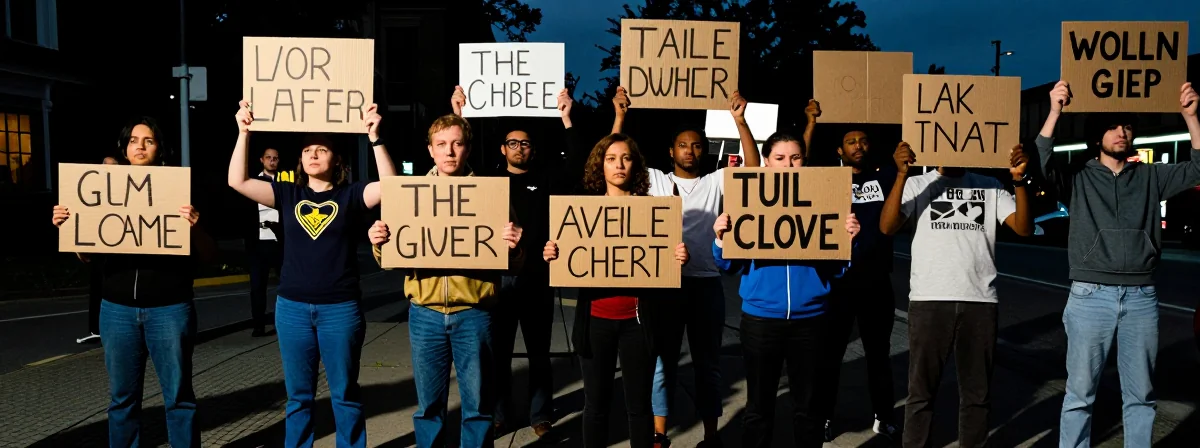
Every week, thousands of people gather in city centers across America to voice their concerns about major global issues. Yet when you turn on your TV or check your favorite news app, you’d hardly know these gatherings exist. This isn’t just about missing coverage—it’s about a deliberate filtering of public discourse that affects what you think matters in the world.
The disconnect between what’s happening in our streets and what appears in our news feeds reveals something deeper about how information flows in our society. Local protests against international conflicts, government policies, and social injustices are happening with remarkable consistency, yet they rarely make it through the filters of mainstream media coverage. This isn’t an accident.
In Denver, protesters have gathered daily for weeks. In Washington D.C., hundreds have rallied near the White House. Cities from Chicago to Los Angeles see regular demonstrations, yet these events rarely break through the noise of national news cycles.
Why Aren’t We Seeing These Protests on National News?
The most obvious answer is also the most uncomfortable: protests that challenge powerful interests don’t get the same coverage as those that align with media narratives. When protests against the Iran war occurred across multiple American cities, they warranted only brief mentions in national news, while similar-sized protests for other causes received extensive coverage.
This isn’t about protest size alone. The Women’s March and BLM protests received saturation coverage, while comparable demonstrations against foreign policy decisions get filtered out. The difference lies in which narratives serve the interests of media owners and their corporate sponsors.
Consider this: major media networks are owned by corporations with international business interests. When protests align with these interests, they get coverage; when they challenge them, they’re often relegated to local news or social media—places where they can’t reach the same audience.
How News Algorithms Control What You See
Your personal news feed isn’t showing you everything that’s happening. It’s showing you what algorithms determine you should see. These algorithms are designed to keep you engaged, not to provide comprehensive information. They prioritize content that generates clicks and shares, often at the expense of context and balance.
In cities like Chicago and Los Angeles, protests happen almost weekly, yet they rarely appear in national news feeds. When they do, it’s often through filtered lenses that minimize their significance. This isn’t just about editorial decisions—it’s about how digital platforms have transformed the way news travels.
The irony is that many people check their phones expecting to see what’s happening in the world, only to get a curated selection of events that align with existing narratives. This creates an information bubble where certain types of protests simply don’t exist in the digital realm.
The Real Reason Protests Get Ignored
Beyond corporate interests and algorithmic filtering, there’s another factor at play: protest visibility. Large, organized protests with clear messaging are easier for media to cover. Spontaneous, decentralized protests that emerge organically from communities are harder to frame within existing narratives.
This is why protests against systemic issues often get less coverage than those that can be easily categorized. When protesters take on complex issues like foreign policy or surveillance systems, they challenge the simplicity that media prefers. The result is a media landscape where certain types of protests are systematically underreported.
In cities across Tennessee and Kentucky, protests have emerged despite no major media attention. These demonstrations continue because they reflect genuine community concerns, not because they’re seeking media validation. Yet without media coverage, they remain invisible to most Americans.
Finding the Truth Beyond Mainstream Coverage
The solution isn’t to stop paying attention—it’s to broaden where you look. Local news outlets, independent journalists, and community networks often provide more comprehensive coverage of protests than national media. Social media platforms, despite their own biases, can sometimes offer glimpses of events that would otherwise go unreported.
What matters most is recognizing that the absence of coverage doesn’t mean the absence of events. When you understand this, you can seek out information from diverse sources rather than relying on a single media ecosystem. This doesn’t mean abandoning mainstream news, but rather supplementing it with perspectives that challenge the dominant narrative.
What This Silence Tells Us About Our Democracy
The most concerning aspect of protest undercoverage isn’t just that we miss out on information—it’s what this silence says about our democratic processes. When public expression of concern is systematically filtered out of national discourse, it creates a feedback loop where people feel their voices don’t matter.
This isn’t about creating conspiracy theories about hidden agendas—it’s about recognizing how media systems function in practice. When protests against major issues like foreign policy decisions receive minimal coverage, it sends a message that these concerns aren’t part of the national conversation.
The real power of protests isn’t just in their immediate impact—it’s in their ability to shape what we collectively consider important. When that visibility is systematically reduced, we all lose something essential to democratic engagement.
The Single Idea That Changes Everything
Here’s what really matters: protest visibility isn’t just about media coverage—it’s about whether our collective concerns are part of the national conversation. When protests against major issues receive minimal coverage, it’s not just information we’re missing—it’s the opportunity to participate in shaping our shared future.
The next time you check your news feed, remember that what you’re seeing is a filtered version of reality. Some protests are there because they align with certain narratives; others are absent because they challenge those narratives. The truth lies in recognizing both what’s shown and what’s hidden.
This awareness isn’t about becoming cynical—it’s about becoming more informed. When you understand how protest coverage works, you can seek out the full picture rather than accepting a curated version. That’s the first step toward a more engaged and responsive democracy.