
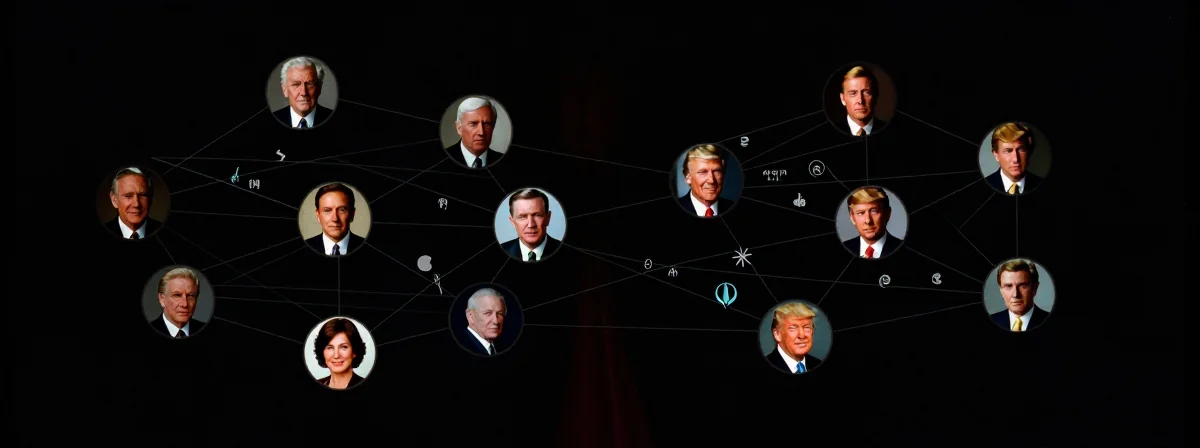
The political landscape has always been filled with shadows and whispers, but few connections are as unsettling as the one that seems to tie Donald Trump’s administration to Jeffrey Epstein’s controversial network. When you look past the headlines and examine the patterns, a disturbing picture emerges that most mainstream narratives conveniently ignore.
What happens when power intersects with secrecy? The Epstein case wasn’t just about one wealthy individual—it represented an entire ecosystem of influence, connections, and questionable activities that extended far beyond what most people realize. The dots connecting this network to certain political figures aren’t just coincidental; they form a pattern that demands closer examination.
Consider how Epstein’s associates seemed to navigate legal and social consequences with unusual ease. It’s not just about protection—it’s about the mechanisms that make such protection possible, and who might be operating those mechanisms.
Why Do Some Political Figures Seem to Be Shielding Epstein’s Associates?
The idea that powerful individuals might protect those with similarly powerful connections isn’t new, but the Epstein case takes this dynamic to another level. When you see patterns of leniency, pardons, or strategic silence around figures directly linked to Epstein, it raises uncomfortable questions about what’s being protected and why.
Take the case of Ghislaine Maxwell. Her legal journey has been anything but straightforward, with multiple instances where her status seemed to afford her privileges not typically available to others facing similar charges. The political winds around her case shifted in ways that defied conventional legal expectations, suggesting something more than standard legal proceedings was at work.
What happens when legal systems appear to bend based on political considerations? The Epstein network wasn’t just about individual relationships—it was about a system of mutual protection that extended through multiple layers of society and power structures.
What Patterns Link Trump’s Administration to Questionable Events?
The timing of certain events often tells a story that official narratives can’t fully explain. When you examine the sequence of actions surrounding controversial incidents during Trump’s administration, a pattern emerges that challenges the official accounts.
Consider how some actions were taken in reverse order of what would make logical sense—like blaming a nation before actually attacking it. This backward approach to foreign policy decisions creates openings for questions about motivation and strategic thinking that go beyond simple policy disagreements.
The suggestion of a potential “9/11 style false flag” operation after an invasion raises even more eyebrows. While conspiracy theories often stretch credibility, the timing and nature of such suggestions can’t be entirely dismissed without examination. What would motivate such an approach, and who would benefit?
How Do Large-Scale Events Become Potential Targets for Manipulation?
Major international events and celebrations have always been vulnerable to exploitation for political purposes. The World Cup, centennials, and federal gatherings represent massive concentrations of attention and resources that can be leveraged in ways that serve specific agendas.
When you see discussions about potential false flag operations at these events, it’s not just about paranoia—it’s about understanding how these events function as strategic assets in broader power struggles. The suggestion that government officials might avoid certain events due to security concerns isn’t just speculation; it reflects a real awareness of potential vulnerabilities.
What happens when celebrations become potential battlegrounds? The shift from enjoying these events to viewing them through a lens of suspicion represents a significant change in how we interact with public gatherings and national celebrations.
Why Does the Mention of Certain Names Immediately Signal Political Division?
The reaction to names like “Trump” or specific figures connected to controversial cases often reveals more about our political divisions than the individuals themselves. When a name immediately signals agreement or disagreement regardless of context, it shows how deeply polarized our discourse has become.
The phenomenon where mentioning a specific name instantly clarifies who you’re addressing, regardless of other context, demonstrates how our political language has become increasingly symbolic rather than substantive. This symbolic communication creates shortcuts in conversation but often prevents deeper understanding.
What happens when political communication becomes more about signaling allegiance than exchanging ideas? The Epstein-Trump connection becomes less about the actual events and more about which side of the political divide you align with, making objective examination nearly impossible.
What Historical Parallels Exist in These Modern Political Controversies?
Looking back at historical instances of political scandals and cover-ups reveals disturbing similarities to what we’re seeing today. The mechanisms of protection, the patterns of information control, and the eventual revelations often follow predictable paths that most people fail to recognize until it’s too late.
The suggestion of parallels between modern events and historical incidents like 9/11 or other major geopolitical events isn’t just about finding patterns—it’s about understanding the deeper structures of power that operate across different eras. These structures often remain invisible until they’re revealed by crisis or investigation.
What happens when we fail to recognize these patterns until after the fact? We allow the same mechanisms to continue operating, ensuring that future generations will face similar challenges without having learned from past experiences.
How Can We Navigate the Complexities of Modern Political Narratives?
The most challenging aspect of examining connections like those between Epstein’s network and Trump’s administration isn’t the lack of information—it’s the overwhelming amount of information, much of it contradictory or deliberately misleading. Navigating this landscape requires a different approach than simply accepting official narratives or falling for extreme conspiracy theories.
Developing critical thinking skills, understanding information sources, and recognizing emotional manipulation are essential tools in this environment. The ability to ask the right questions is more valuable than having all the answers, especially when dealing with complex political networks and hidden influences.
What happens when we approach political information with skepticism rather than acceptance? We create space for more nuanced understanding, even if it means uncomfortable truths or unresolved questions. This approach may not provide simple answers, but it preserves the possibility of discovering truth amid the noise.