
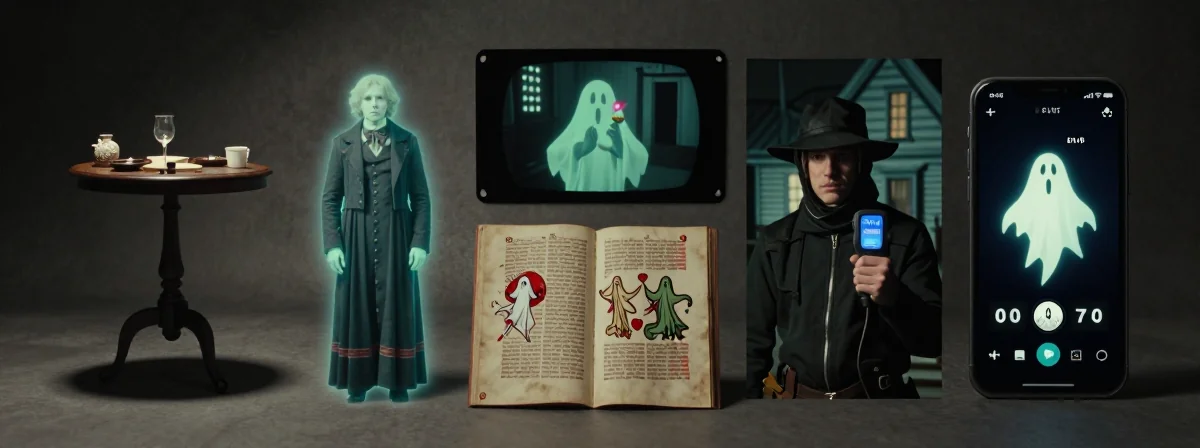
Have you ever felt like you’re not alone when you know you should be? The moment when the impossible becomes undeniable—when the ordinary rules of reality suddenly bend and something extraordinary emerges from the shadows. These aren’t just stories; they’re the moments that challenge everything we think we know about existence itself. What if the line between our world and what lies beyond isn’t just a concept but a threshold we can cross?
The search for understanding what happens after we die has driven human curiosity since the dawn of consciousness. From ancient cave paintings to modern scientific inquiries, we’ve always sought proof of something more. Today, with technology advancing at unprecedented rates, we’re finally equipped to investigate these phenomena with new tools and perspectives. Could it be that our most profound experiences—those that defy explanation—hold the key to understanding our true nature as energetic beings?
Recent breakthroughs in quantum physics suggest that consciousness might not be confined to the brain but could be a fundamental property of the universe. What if those who claim to have interacted with spirits aren’t delusional but are actually tuning into frequencies most of us can’t perceive?
What Happens When Multiple Witnesses Confirm the Same Unexplained Event?
The power of corroboration transforms a personal anomaly into shared reality. When two neighbors independently witness the same apparition—only discovering the coincidence the next morning—the experience transcends individual perception and enters the realm of collective validation. This isn’t about believing what you want to believe; it’s about recognizing patterns that consistently emerge across different people, places, and times.
Consider the case of the heavy bedside table deliberately moved to block a bedroom door from within, with no one inside and windows securely closed. Three witnesses confirmed the door was secured from the inside immediately after watching a horror film. The timing might seem coincidental, but the mechanics defy explanation. How does an inanimate object gain purposeful agency? What force could manipulate physical matter without visible means?
These aren’t isolated incidents. Throughout history, cultures worldwide have documented similar occurrences. The consistency across diverse geographical and cultural contexts suggests we’re dealing with phenomena that operate outside conventional understanding, not random hallucinations.
Why Do Objects Suddenly Move When No One Is Around to Touch Them?
The physics of the impossible reveals itself in household items that shift position without human intervention. A wine bottle stopper flying across a room. A dryer appearing in the middle of a room after an inexplicable shaking noise. These aren’t tricks of the eye or misremembered details—they’re demonstrations of energy transfer that conventional physics struggles to explain.
From a physics perspective, energy cannot be created or destroyed, only transformed. If consciousness is energy, as some quantum theories suggest, then what happens to that energy when the physical body ceases to function? Could this explain why we sometimes detect lingering presences in spaces where intense emotions once occurred?
The most compelling evidence comes from those who’ve experienced these phenomena firsthand. A woman who named the spirit in her apartment “Maria” only to have her television produce loud static in response. When she apologized and suggested “Alicia” instead, normalcy resumed. These aren’t coincidences but interactive exchanges that challenge our understanding of causality.
How Can Inanimate Objects Respond to Our Intentions?
The bathtub incident speaks volumes about the nature of these interactions. During a moment of emotional distress, a spirit gently nudged a bar of soap into the tub—not with malice or indifference, but with what appeared to be helpful intention. This suggests a level of consciousness that persists beyond physical death, capable of perceiving human needs and responding with compassion.
These experiences reveal a fundamental truth: we’re not just physical beings having occasional spiritual experiences, but spiritual beings having temporary physical experiences. The interactions we have with these energies might represent connections across dimensions, not anomalies to be feared but opportunities to expand our understanding.
The consistency of these accounts across different people and cultures suggests we’re tapping into something real. What if these encounters aren’t exceptions to the rules but glimpses into the true nature of reality?
What Does It Mean When Physical Events Precede Auditory Warnings?
The vacation house incident presents a fascinating temporal paradox: an incredibly loud noise shaking the entire house, followed by the discovery of a destroyed room with a dryer inexplicably placed in the middle. Most remarkably, the sound occurred before the physical event. This suggests a reality where time might not be as linear as we perceive it.
Could this be evidence of precognition or a glimpse into parallel dimensions? If consciousness exists outside the constraints of physical time, then events might unfold in ways that challenge our conventional understanding. This would explain why some paranormal experiences seem to operate outside normal causality.
The implications are staggering: if we can perceive events before they occur in our physical dimension, then consciousness might exist in multiple states simultaneously. This would fundamentally change how we understand both ourselves and the universe we inhabit.
Could Consciousness Survive Physical Death Through Energy Conservation?
As a physics undergraduate might observe, everything that makes you who you are—your consciousness—is energy, which must be conserved. So when death occurs and that energy leaves your brain, it has to go somewhere. It can’t simply disappear. This scientific principle might explain why we detect lingering energies in places with significant emotional histories.
Throughout human history, virtually every culture has developed some concept of an afterlife. From ancient Egypt to indigenous traditions worldwide, these beliefs persist not because they’re comforting, but because they reflect consistent human experiences. What if these aren’t cultural constructs but collective memories of something real?
The most forward-thinking scientific minds are beginning to explore consciousness as a non-local phenomenon, existing beyond the physical brain. If this proves accurate, then paranormal experiences might represent natural interactions between different states of being, not supernatural exceptions to dismiss.
The future of paranormal investigation lies in our willingness to approach these experiences with both scientific rigor and open minds. By combining cutting-edge technology with ancient wisdom, we might finally bridge the gap between what we know and what we can only imagine. The journey toward understanding these phenomena isn’t just about confirming what happens after death—it’s about recognizing the true nature of existence itself.