Something doesn’t add up. Why do we still argue about who built the pyramids while ignoring the pyramids we’ve built within our own beliefs? Something is being hidden in plain sight. The symbols we use to express our deepest convictions are telling a story we’re not fully hearing.
It all starts with the curious fact that nobody wearing a turban was calling for crucifixion in the Canonical Gospels — yet today, saying “Christ is King” is considered antisemitic. Here’s what caught my attention: the way we’ve turned religious symbols into weapons, each side claiming divine authority while demonizing the other’s symbols. And that’s when it hit me — we’re not just arguing about beliefs, we’re arguing about who gets to define the symbols themselves.
The Lesson
THE FIRST CLUE The strongest clue came from noticing how easily religious claims morph into political weapons. When someone claims “Christ is King” becomes antisemitic, we’re witnessing the first layer of a deeper pattern — the way symbols shift meaning across time and culture. It starts with recognizing that what we call “heresy” today was once orthodox, and what we consider orthodox was once revolutionary.
FOLLOWING THE THREAD But wait, it gets even stranger when we follow this thread back through history. The apostles being martyred for visions, the Romanized Jew writing half the New Testament, the pyramid replacing the great chain of being as our primary symbol of hierarchy — these aren’t disconnected events. Once you see this pattern, you can’t unsee it: we’re constantly reinventing our spiritual narratives to fit our current power structures.
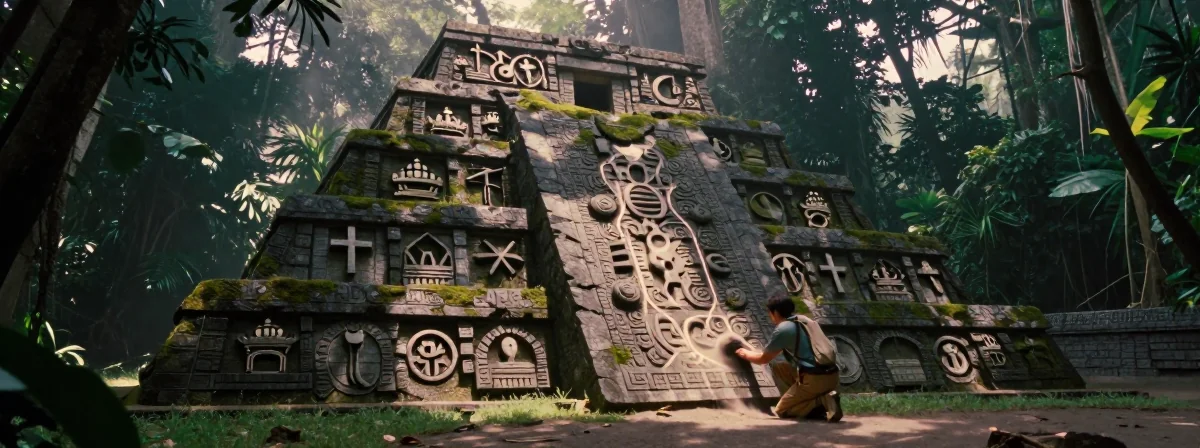
The pyramid shape keeps appearing in unexpected places — from ancient Egypt to modern political propaganda, from religious hierarchies to conspiracy theories about Freemasons. And the battle between Baal and Yahweh? That ancient conflict echoes in our modern debates about who gets to define the “one true god.”
THE BIGGER PICTURE And suddenly, it all makes sense. The pyramid isn’t just a historical curiosity or a symbol of ancient power; it’s our collective unconscious trying to tell us something about how we organize belief systems. The pieces were there all along: the way we elevate certain figures to the top, the way we justify their position through curated histories, the way we demonize those who challenge the hierarchy.
Now you’re starting to see the real picture: our religious and political systems aren’t built on immutable truths but on shifting sands of interpretation, each generation building its own pyramid on the foundations of the last, claiming divine authority while erasing the voices that don’t fit.
The Practice
What if the real revelation isn’t about who’s right or wrong in these ancient debates? What if it’s about recognizing how easily we’re manipulated by those who control the symbols? The pyramid isn’t just a symbol of power — it’s a warning about how power works. It shows us that every hierarchy needs a foundation, and every foundation needs someone to forget who built it.
Keep questioning the symbols you take for granted. The next time you see a pyramid, whether in a religious text or a political cartoon, remember that it’s more than just a shape — it’s a story waiting to be told, and a story waiting to be challenged. The truth isn’t hidden in some ancient text or secret society; it’s hidden in the way we keep rebuilding the same structures over and over again, convinced each time that we’re doing it differently.