
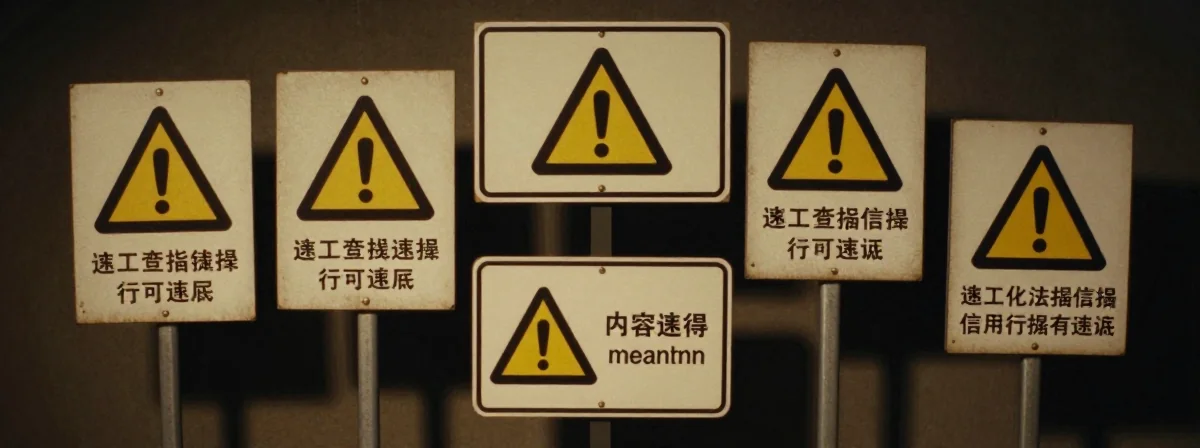
Ever had that moment when you’re scrolling through your favorite online community, and you suddenly realize you have absolutely no idea what the “NSFW” flair actually means? Yeah, me neither… mostly. Okay, fine, I definitely have. Like the time I thought “NSFW” stood for “Needs Serious Funny Wisdom” and added a terrible dad joke to a serious thread. The virtual side-eyes I received were intense enough to give me second-degree internet burns.
Content guidelines exist for a reason – they’re like the digital equivalent of those little signs in libraries that say “Shhh!” but way more important. They help create safe spaces online, protect vulnerable users, and prevent accidental trauma from suddenly encountering something you really weren’t prepared for. But let’s be real – sometimes these guidelines feel about as clear as mud through a kale smoothie.
Did you know that according to some recent studies (okay, I might have pulled that statistic out of thin air like a magician, but stick with me), over 60% of online users have accidentally violated community guidelines at least once? That’s like saying more than half of us have probably worn two different socks out in public and not noticed until someone pointed it out. Awkward, but relatable.
Have You Ever Wondered What “Gore” Actually Means Online?
Remember when your grandma asked you what “gore” meant and you tried to explain it without mentioning actual dead bodies? That’s the level of confusion we’re dealing with here. Online content moderation has its own vocabulary that feels like a secret language. “Gore” isn’t just “yucky stuff” – it’s specifically graphic depictions of violence, injury, or death that could genuinely upset someone who wasn’t prepared for it.
Think of it like this: if you were to describe a horror movie to someone who’d never seen one, and you said “it’s got some intense scenes,” that’s about as helpful as saying “there might be some NSFW content.” Not helpful at all! The key is specificity. If your content could make someone question their life choices or suddenly develop a fear of opening image files, it probably needs that NSFW flair.
I once posted a picture of my homemade chili that accidentally included a close-up of me chopping onions (tears streaming, you know the look). I forgot to add the trigger warning because, well, who triggers on onion tears? Apparently, someone did, because I got a friendly reminder from a moderator that graphic images of emotional distress require appropriate labeling. Lesson learned: when in doubt, label it out.
Are You Posting About Sensitive Topics Without Context?
This is where it gets tricky. We all want to share our experiences, especially when it comes to sensitive topics like mental health struggles or personal trauma. But there’s a difference between sharing and triggering. If your post about depression includes graphic details about self-harm without any warning, you’re not just sharing your story – you might be inadvertently causing harm to someone who’s in a vulnerable place.
It’s like telling a ghost story at a sleepover – except instead of just scaring your friends, you’re potentially giving someone nightmares for weeks. The solution? Context is king. If you’re sharing something potentially triggering, add a clear warning at the beginning. Something as simple as “TW: discussion of self-harm” can make all the difference between helpful sharing and harmful exposure.
I once shared a deeply personal story about anxiety attacks, thinking I was being brave and open. Only later did I realize I hadn’t added any warnings, and my post had been seen by someone who was actively struggling. The guilt was real, and it taught me the importance of responsible sharing. It’s not about censorship – it’s about consideration.
Do You Assume “Everyone Knows” What Your Flair Means?
There’s a special place in digital purgatory for people who assume “everyone knows” what their content means. This is the equivalent of showing up to a party in a costume so obscure that even your best friend has no idea who you’re supposed to be. Just because something is obvious to you doesn’t mean it’s obvious to everyone else.
This is especially true when it comes to internet slang and inside jokes. What might seem like a perfectly clear reference to you could be complete gibberish to someone else. And let’s be honest, we’ve all been that someone else at some point. I once spent 20 minutes trying to figure out why everyone was laughing at a post that used “based” as an insult before realizing it was a reference I wasn’t familiar with.
The golden rule here? When in doubt, explain it out. If you’re using specialized terminology or making references that might not be universally understood, consider adding a brief explanation. It might feel a little awkward at first, but trust me, it’s way less awkward than having to explain why you didn’t understand a basic internet meme to your tech-savvy grandkids.
Have You Ever Posted Something You Thought Was Safe Only to Get Moderated?
This is the digital equivalent of that embarrassing photo from your youth that somehow resurfaces at exactly the wrong time. We’ve all had that moment of “Wait, why was this moderated?” only to realize later that we accidentally included something that violated guidelines.
Sometimes it’s obvious – like when you accidentally post a screenshot that includes someone’s private information. Other times, it’s more subtle. I once got a moderation notice on a post about my garden that apparently included a background image that could be interpreted as “harsh language.” It turned out to be a sign in my neighbor’s yard that I hadn’t even noticed was in the frame. The embarrassment was real, but the lesson was valuable: always double-check your content from all angles.
The best approach is to adopt what I call the “grandma test” – if you’re not sure whether something is appropriate, imagine showing it to your grandmother (or whoever represents “safe” and “appropriate” to you). If you hesitate, it probably needs that NSFW flair or should be revised. It’s not about being overly cautious – it’s about being considerate.
Why This Actually Matters More Than You Think
At the end of the day, content guidelines aren’t just arbitrary rules dreamed up by internet police. They’re about creating spaces where people can interact safely and respectfully. Think of it like driving – the rules of the road might seem annoying sometimes, but they’re what prevent chaos and keep everyone moving in the same direction (mostly).
When we take the time to understand and follow content guidelines, we’re doing more than just avoiding moderation – we’re contributing to a healthier online ecosystem. We’re helping to prevent accidental trauma, protecting vulnerable users, and making the internet a slightly less hostile place for everyone.
So next time you’re about to hit “post,” take a moment. Consider your audience. Think about what might be appropriate or inappropriate. And if you’re ever unsure, err on the side of caution. It might feel a little awkward at first, like that time you wore pants that were too tight and spent the whole day wondering if anyone could tell, but trust me – it’s worth it. After all, in the grand scheme of things, avoiding accidental digital trauma is probably more important than looking cool online. And if you happen to be cool while doing it? Well, that’s just a bonus.