
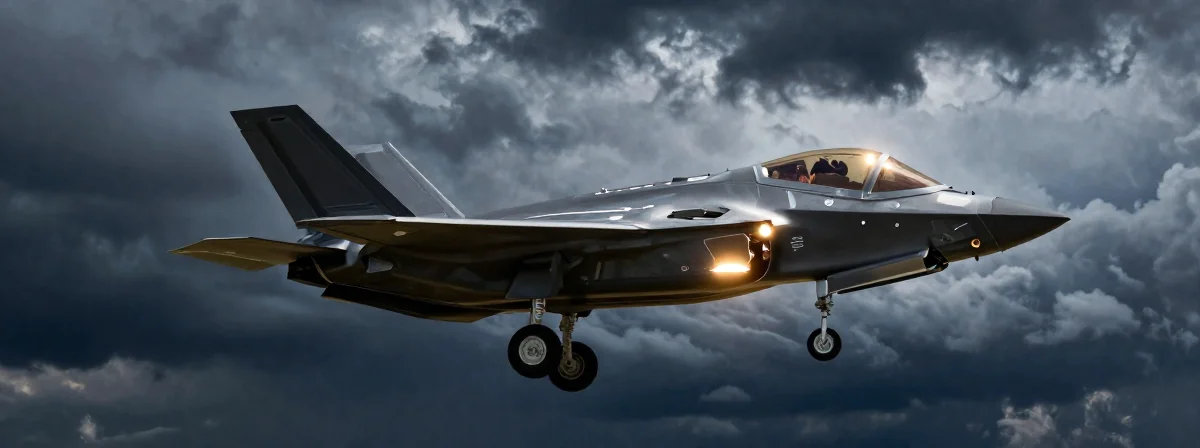
Something doesn’t add up. An F-35—supposedly invisible to radar—gets hit in Iranian airspace. Then comes the flood: conflicting reports, convenient landings, and claims that evaporate under scrutiny. It all starts with…
The Evidence Points To
THE FIRST CLUE Here’s what caught my attention: the immediate contradiction between official narratives. One moment we’re told the F-35 was “destroyed,” the next it’s “damaged but landed safely.” The pattern here is classic obfuscation—when the truth is inconvenient, the first casualty is consistency. What the data shows is that both the U.S. and Iran have been spinning this incident to serve their own narratives.
FOLLOWING THE THREAD And that’s when it hit me: the F-35’s “stealth” might not be the issue everyone assumes. The discussion reveals that the aircraft was likely hit by a missile with a proximity fuse—not a direct hit from a gun as some claimed. This anomaly suggests that the Iranians may have used older technology effectively, not necessarily that the F-35’s stealth failed. But wait, it gets even stranger: reports surface that Russia may have supplied Iran with S-400 systems, while others wonder if China’s involvement in Iran’s weapons supply chain played a role. Once you see this pattern, you can’t unsee it—the incident isn’t just about one aircraft; it’s a proxy test of multiple nations’ military tech.
THE BIGGER PICTURE And suddenly, it all makes sense: the F-35 incident is a microcosm of modern warfare’s hidden truth. The pieces were there all along—the U.S. downplaying its losses while Iran exaggerates its successes, both sides using the event to justify future actions. Now you’re starting to see the real picture: this wasn’t just a military event; it was a psychological operation, a test of systems, and a perfect example of how truth becomes the first casualty in conflict. The entire narrative—from the initial reports to the “convenient” landing—was crafted to serve strategic goals.
WHAT IT MEANS This isn’t just about one damaged jet; it’s evidence that the military-industrial complex thrives on ambiguity. The incident exposes how both nations manipulate information to fuel fear and justify spending. What we’re seeing is the natural result of a system where deception is more valuable than transparency.
The Analysis Continues
The F-35 incident isn’t an isolated event—it’s a pattern. Every military advancement comes with its own blind spots, and every conflict creates opportunities for those blind spots to be exploited. What if the real lesson isn’t about stealth failing, but about how systems of information control always outpace the technology they’re meant to hide? Keep questioning the narratives, because the truth is always in the gaps.