
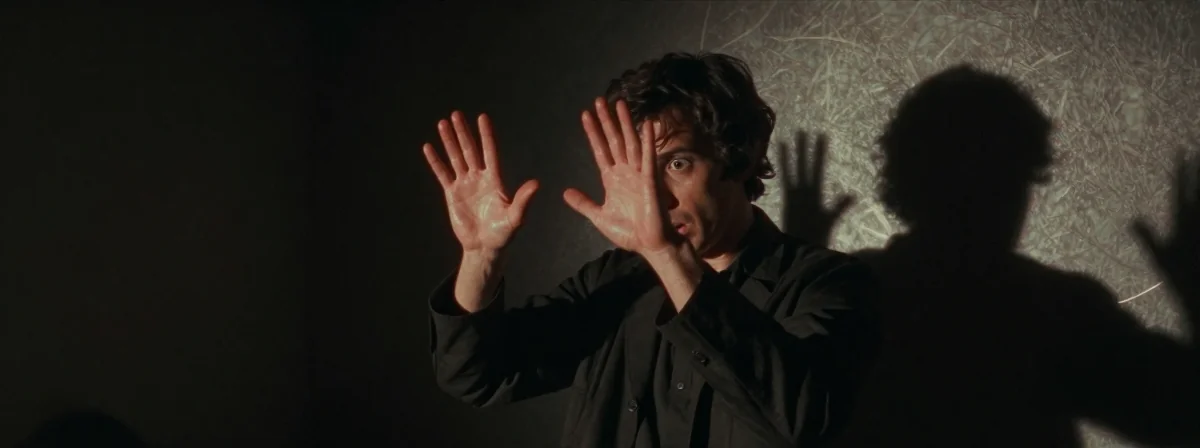
Something doesn’t add up. Something is being hidden. A simple walk with a dog, a dimly lit street, a sudden choke hold—then nothing. It all starts with the husband’s warning: don’t look back at “it.” Why the secrecy? Why the fear? And what connects this to a haunting coat, a suicide, and a rapper’s lyrics?
It all starts with the most disturbing detail—the choke hold that felt real but wasn’t. You were walking your dog on a neighborhood sidewalk, dim yellow streetlights casting long shadows. Suddenly, you felt an invisible force attack you from behind, tightening around your throat. You lost balance, instinctively looked back—and saw nothing. Your dog, your silent companion, didn’t react. The scene plays out like a glitch in reality. The pattern here is clear: something unseen, something with intent, something that vanishes when confronted.
And that’s when it hit me—the husband’s vague warning wasn’t random. He’d had his own childhood experiences, unspoken traumas that now echo in this moment. He knows what “it” is, but he won’t say. Why? Because whatever this is, it thrives on secrecy. It’s not just a medical incident or a trick of the mind. It’s something that attaches itself, something that follows. The artist Chino XL comes up—his lyrics, his past, somehow tied to this. The connections are tenuous at first, but they tighten like that invisible stranglehold.
But wait, it gets even stranger. The story of the haunting coat—the poncho from a friend who committed suicide. The lady who kept it, the “it” that wouldn’t leave her alone until the coat was gone. The cancer that disappeared when the attachment was broken. The pattern is emerging: used items, inherited emotions, lingering energies. Attachments come into homes through uncleared things. And the advice given: Never be afraid of looking at “it.” Even if it’s terrifying. Even if you’re being choked to death, look back. Acknowledge it. Confront it. The fear that freezes you—your brain’s survival instinct—might be exactly what “it” wants.
Once you see this pattern, you can’t unsee it. The choke hold, the haunting coat, the suicide poncho—they’re all pieces of the same puzzle. “It” isn’t a ghost or a demon in the traditional sense. It’s something that feeds on denial, on the unspoken, on the things we hide away. Your husband knows this. The lady with the coat knew this. Even the rapper’s lyrics, the childhood traumas—they’re all breadcrumbs leading to the same truth: what you don’t face will find you. And suddenly, it all makes sense. The reason the dog didn’t react? “It” isn’t corporeal. It doesn’t exist in the same way you do. But it can still choke you, still unbalance you, still leave you shaken.
The pieces were there all along. The dimly lit street, the yellow streetlights—creating the perfect atmosphere for something unseen to operate. The husband’s warning, the artist’s connection, the story of the coat—they’re all warnings in themselves. Now you’re starting to see the real picture: “it” is whatever you refuse to acknowledge, whatever you sweep under the rug. It could be trauma, guilt, grief—something with a grip that tightens over time. And the only way to break it? Face it. Look back. Even when you’re scared to death.
What it means is this: the unseen is always present. The things we don’t talk about, the emotions we suppress, the memories we bury—they don’t just disappear. They linger. They attach. They choke us from behind, and when we finally turn around, they vanish because they can’t exist in the light of acknowledgment. The real horror isn’t what “it” is—it’s what we let it become by looking away.
The analysis continues. You’re left with a single idea that makes the entire investigation click into place. The next time you feel that invisible hand, that unseen presence—don’t freeze. Don’t look away. The moment you confront it, you break its power. It’s not about what “it” is, but what you do about it. The choice is yours: let it linger in the shadows, or pull it into the light and watch it dissolve.