
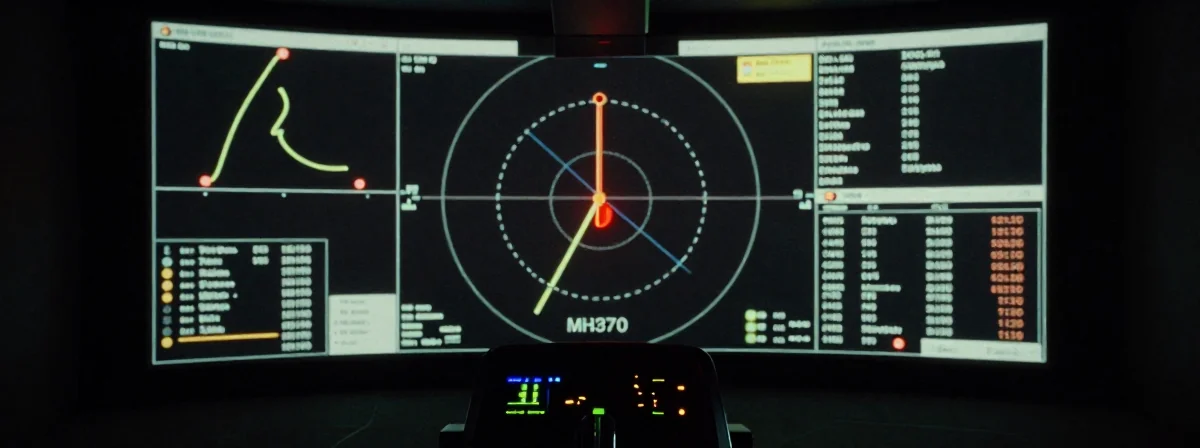
The ocean holds its secrets close, like a wise elder guarding ancient knowledge. When Malaysia Airlines Flight 370 vanished in 2014, it took 238 souls into its depths, leaving behind a mystery that has captivated the world for years. What began as a routine flight ended in the most extensive search in aviation history, yet the wreckage remains elusive. The truth, however, may have been hidden in plain sight all along—not in the vast ocean, but in the quiet corners of a home flight simulator.
Admiral Cloudberg’s long-form analysis of MH370 remains the most comprehensive examination of the case, offering insights that many have overlooked. Her ability to translate complex aviation details into accessible explanations has made her work invaluable. What emerges from her research is a pattern that aligns too perfectly to be coincidence: the captain’s flight simulator data reveals a practice route that matches the southern Indian Ocean path where MH370 was last detected.
Could Partial Data Reveal a Deliberate Path?
The flight simulator data often gets reduced to a simple narrative: the captain practiced the route. But this overlooks a crucial detail—the data was pieced together from multiple sessions over weeks. It wasn’t a single, perfect run but rather fragments of coordinates that, when connected, form an unsettling picture. Like stars in the night sky, these data points align to create a constellation that points toward the southern Indian Ocean.
Consider this: if someone were planning something deliberately, they wouldn’t need a perfect rehearsal. They’d need familiarity with the controls and procedures. The simulator data, though incomplete, shows the captain practicing the maneuvers that would be necessary to execute such a flight. It’s like learning the strokes of a painting—one doesn’t need to see the entire canvas at once to understand the artist’s intent.
The Ocean’s Vastness and Human Psychology
The ocean’s depth and breadth make it a formidable witness. Even with modern technology, finding something as large as a commercial aircraft in its expanse is like searching for a pebble in a desert. This reality has fueled countless conspiracy theories, each offering a narrative that satisfies our need for answers. Yet, the simplest explanation often lies in the most uncomfortable truth.
The captain’s personal life adds another layer to this mystery. Reports of his political frustrations and the timing of his flight—just after the opposition leader he supported was sentenced—create a psychological backdrop that some find compelling. While we may never fully understand why someone would choose such a path, the evidence suggests a deliberate act rather than an accident.
The Cockpit’s Fortress and the Copilot’s Silence
In aviation, the cockpit door is designed to be impenetrable once locked—a security measure to prevent unauthorized access. This feature, while crucial for safety, also becomes a tool in the hands of someone with malicious intent. The Germanwings tragedy serves as a chilling reminder of how easily this can be exploited.
In MH370’s case, the captain could have locked the copilot out, leaving him helpless outside. The copilot’s silence isn’t a sign of inaction but of being unable to intervene. This scenario, though horrifying, aligns with the evidence we have. It’s a reminder that even in our most secure spaces, vulnerabilities exist.
The Oxygen Tanks and the Final Act
One of the most compelling pieces of circumstantial evidence involves the pilots’ oxygen tanks. Reports indicate that shortly after the pre-flight safety check was completed, someone ensured that only the pilots’ oxygen tanks were refilled. This detail, when viewed alongside the simulator data and the flight path, suggests a meticulous plan.
The oxygen tanks would have allowed the captain to remain conscious throughout the flight, ensuring he could execute his plan without interruption. It’s a detail that speaks to the precision of his intentions, much like a sculptor who carefully prepares his tools before creating his masterpiece.
The Wreckage That Washes Ashore
Over the years, parts of MH370 have washed up on the shores of islands in the Indian Ocean. Each piece, etched with serial numbers and encrusted with sea growth, serves as a silent testament to the flight’s fate. These fragments, though small, are physical evidence that the plane did indeed end up in the southern Indian Ocean.
The question remains: could the wreckage itself provide definitive proof of deliberate action? While the black box might be beyond recovery, the structural damage to the aircraft could reveal whether it was intentionally flown into the ocean. Certain parts of the plane, when examined closely, might show signs of controlled descent rather than catastrophic failure.
Beyond the Mystery: A Reflection on Aviation Safety
MH370’s disappearance has prompted significant changes in aviation safety, including real-time tracking of aircraft and improved communication systems. These advancements, born from tragedy, offer a silver lining in an otherwise dark story.
As we reflect on MH370, we’re reminded that aviation, despite its marvels, remains vulnerable to human error and intent. The flight simulator data, the oxygen tanks, the locked cockpit door—they all point to a deliberate act that forever changed how we view air travel.
In the end, MH370’s story isn’t just about a missing aircraft; it’s about the intersection of technology, human psychology, and the vast unknown. It’s a reminder that even in our most advanced systems, mysteries can emerge, challenging us to seek understanding in the face of uncertainty. And perhaps, in that search, we find not just answers but a deeper appreciation for the delicate balance between innovation and human fallibility.