
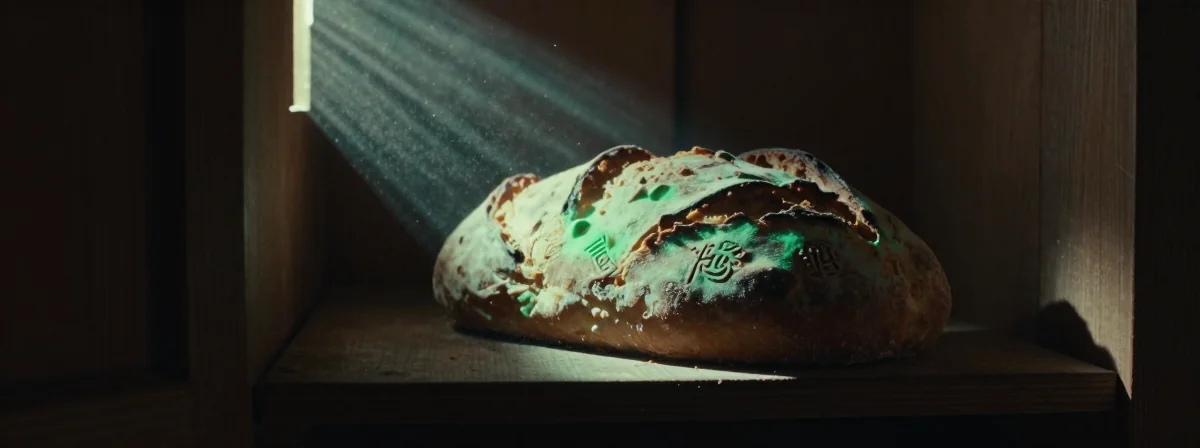
Something doesn’t add up. A loaf of bread that sits on your counter for weeks—no mold, no decay, just… waiting. It all starts with this impossible freshness. This isn’t just bad bread. This is a deliberate deception.
What I Discovered
THE FIRST CLUE Here’s what caught my attention: the ingredients list on store-bought bread has ballooned from four simple items to nearly twenty complex chemicals. It starts with preservatives like Calcium Propionate and Sodium Propionate—chemicals banned in the EU for their dangerous effects. And that’s when it hit me: this isn’t accidental. This is engineered to keep us eating something that shouldn’t last longer than a week.
FOLLOWING THE THREAD But wait, it gets even stranger. The bread that sits in your garage for months, untouched by nature’s decay, behaves like a sponge—squishing and bouncing back unnaturally. Once you see this pattern, you can’t unsee it: Americans buy bread expecting it to last a week, while Europeans expect to eat it fresh. The chemicals added to “prevent the bread going dry/crusty” are actually preventing it from being real food at all. And that’s when the connections began to form: shelf stability over nutritional value. Profit over health.
THE BIGGER PICTURE And suddenly, it all makes sense. The Americans reporting stomach issues, the Europeans baffled by American bread tasting like “bleach and sugar and plastic,” the MTHFR gene mutation sufferers whose bodies reject these synthetic nutrients—now you’re starting to see the real picture. The bread isn’t just preserved; it’s transformed into something unrecognizable. They strip the wheat berry of its natural nutrients, then pump it full of synthetic vitamins that 45% of the population can’t process. The pieces were there all along: a food system designed to last on shelves, not inside bodies.
WHAT IT MEANS This isn’t just about bread. It’s about control. It’s about a system that prioritizes profit margins over human health, that keeps us dependent on “food” that can’t even decay naturally. When you see a loaf of bread that defies nature, remember this: it’s not real food. It’s a chemical construct designed to keep us eating, buying, and trusting—while our health deteriorates.
The Truth Is Out There
The truth is hiding in plain sight. In the ingredients list. In the expiration dates that never expire. In the stomachs of millions who feel something’s wrong but can’t quite put their finger on it. This isn’t a conspiracy theory—it’s a conspiracy fact. The next time you reach for bread, ask yourself: what are you really eating? And more importantly, who benefits when you don’t know.