
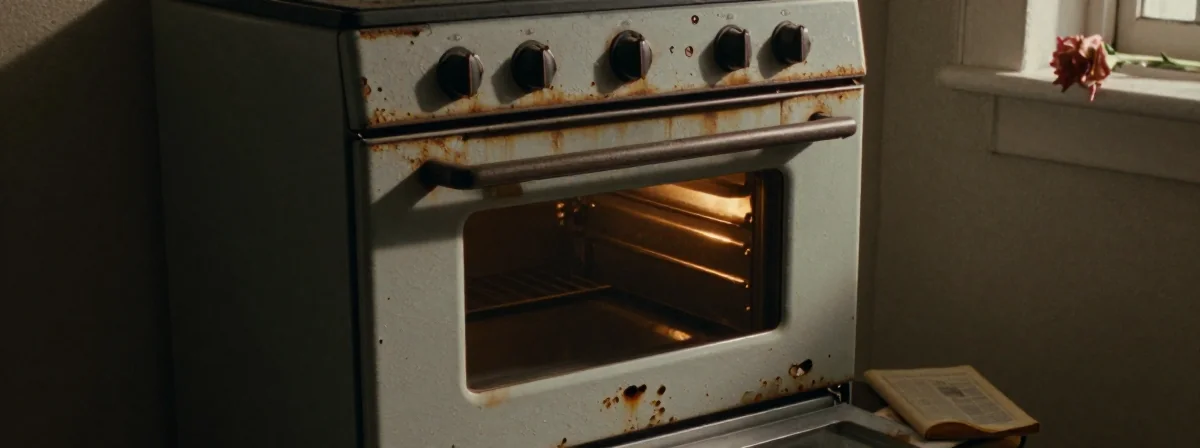
Something doesn’t add up. A young woman enters a bakery, and hours later, black liquid seeps from an oven. No one heard screams. No one smelled burning flesh—until it was too late. What happened in those silent, scorching minutes? It all starts with the oven itself.
The Evidence
THE FIRST CLUE
It starts with the mechanics. Walk-in ovens at places like Walmart and Panera have an exterior latch that must be engaged for the oven to even turn on. This isn’t a casual mistake—someone has to actively lock the door from the outside. And yet, here we are, with a tragedy that defies this design. How? The first thing that doesn’t add up: if the oven couldn’t be turned on without that latch, how was she inside?
FOLLOWING THE THREAD
And that’s when it hit me—the internal release button. A manager inside an oven, pressing a hidden lever with an oven mitt. A young worker who never knew such a button existed. This isn’t just about mechanics; it’s about training. Did she know about the release? Did anyone show her? The oven wasn’t actively heating when her manager demonstrated it—only “paused” when the door was open. But what if the door closed behind her, and the heat resumed? What if she never learned the escape route?
But wait, it gets even stranger. Synthetic fabrics burning would smell like plastic. No one reported that scent. And black liquid seeping from the oven—was that residue from baking, or something else? The timeline shifts: if the oven was on, why no smell? If it was off, how did she die? The contradictions pile up like hot coals.
Once you see this pattern, you can’t unsee it. The oven’s design suggests an accident is nearly impossible—yet here we are. Suicide? Unlikely, given the method. Murder? Too risky in a Walmart with cameras. The only thread that holds: inadequate training. A lack of knowledge about the very machine she worked with.
THE BIGGER PICTURE
And suddenly, it all makes sense. The oven wasn’t just a machine; it was a trap with a hidden key. The exterior latch meant someone outside had to lock it—accidentally or intentionally. The internal release meant escape was possible—if you knew it was there. The black liquid, the lack of synthetic-burn smells—these weren’t clues to a crime, but to a failure. The pieces were there all along: a young worker, a poorly explained safety feature, and a moment of panic when the door clicked shut.
Now you’re starting to see the real picture. This wasn’t about a mystery to be solved, but a lesson to be learned. The oven’s design was meant to prevent exactly what happened. But without proper training, the safety feature was invisible. The tragedy wasn’t just her death; it was the unnoticed flaw in the everyday.
WHAT IT MEANS
What it means is that the most dangerous things aren’t always the obvious ones. They’re the hidden levers, the unspoken rules, the safety mechanisms no one bothers to explain. The oven wasn’t the villain; it was the stage. The real story is in the gaps between knowledge and action, between design and implementation. And that’s the truth that changes everything.
Key Takeaways
The investigation isn’t about finding a culprit—it’s about recognizing the silent failures in our systems. This wasn’t an accident in the traditional sense, but a preventable tragedy born from overlooked details. The real horror isn’t in the oven’s heat, but in the moments before it turned on—when no one thought to say, “Here’s how you get out.” That’s the lesson that lingers.