
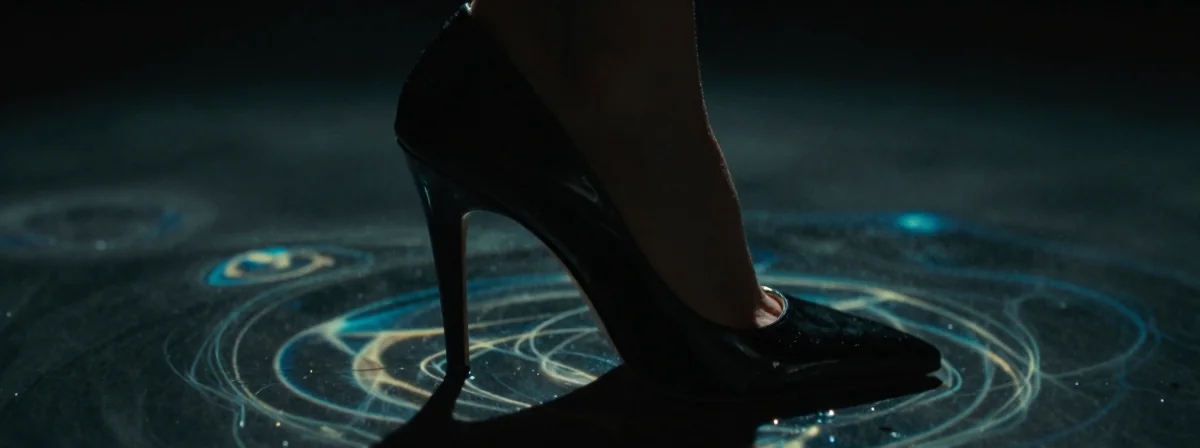
Something doesn’t add up. A regulation stiletto in a military uniform. A fake persona pushing a narrative. The shadows of shoes that don’t belong. It all feels like pieces of a puzzle scattered across time and space. It all starts with…
The Academic Approach
THE FIRST CLUE It starts with the image of stilettos in a uniform that defies regulation. Historical precedent suggests that fashion choices, especially in uniformed services, carry symbolic weight. From an academic perspective, the stiletto—a symbol of elegance and power—clashes with the traditional imagery of military discipline. But why? The first thing that doesn’t add up is the deliberate placement of an item that breaks the rules. It’s as if someone is signaling something beyond the surface.
FOLLOWING THE THREAD And that’s when it hit me—the connection to the fake persona. The research indicates that creating an entire fake identity to influence perception is not new. From an academic perspective, the use of AI-generated models to craft narratives is a modern extension of historical propaganda techniques. But wait, it gets even stranger—the inconsistencies in the fake persona’s details, the mismatched insignia, the shadows that don’t align. Once you see this pattern, you can’t unsee it: the deliberate creation of a false reality to manipulate perception.
But it goes deeper. The discussion about multiculturalism and progress—J Edgar Hoover in stilettos, a young man in a locker room—ties into the broader theme of identity and representation. The research indicates that these anomalies are not random; they are part of a larger effort to blur the lines between reality and fabrication. The pieces are starting to fall into place, revealing a complex web of deception.
THE BIGGER PICTURE And suddenly, it all makes sense. The stiletto, the fake persona, the inconsistencies—they are all part of a sophisticated psychological operation. The pieces were there all along: the regulation mini-skirt that looks fake, the AI-generated model with mismatched details, the deliberate use of shadows to mislead. Now you’re starting to see the real picture—a world where fashion, politics, and digital deception intersect to create a narrative that serves an unseen agenda.
WHAT IT MEANS Reframing the entire discussion as a profound insight reveals that we are witnessing the evolution of influence operations. The stiletto in the uniform is not just a fashion statement; it’s a symbol of the breakdown of traditional boundaries. The fake persona is not just a digital creation; it’s a tool for shaping perception. This isn’t just information—it’s a revelation that changes perspective on how narratives are constructed and manipulated in the digital age.
What We Can Conclude
The investigation into these hidden connections leaves us with a single idea: the lines between reality and fabrication are becoming increasingly blurred. The deliberate placement of anomalies—stilettos in uniforms, fake personas with mismatched details—serves a purpose beyond the obvious. It’s an invitation to question what we see, to look beyond the surface, and to recognize the unseen forces at play. The next time you encounter something that doesn’t add up, remember: there might be more to it than meets the eye.