
The world moves at an impossible pace these days. Notifications buzz, deadlines loom, and the pressure to “do more” never lets up. Yet, deep down, you know something feels off. There’s a quiet ache for something more—something steadier, truer. It’s as if we’re all searching for a compass in a world that’s lost its north.
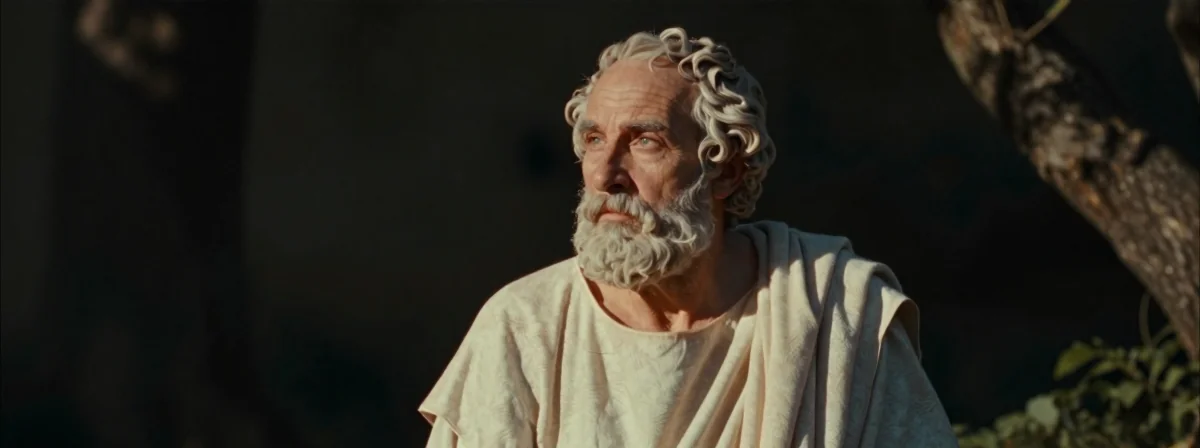
What if the answers we seek aren’t new at all? What if they’ve been waiting for us all along, in the quiet rooms of ancient philosophers who understood the human soul better than we do today? Their wisdom wasn’t about quick fixes or fleeting trends. It was about building a foundation so strong that nothing could shake it.
Consider this: the Stoics, Buddhists, and Taoists didn’t have smartphones, yet they grasped truths about the mind and heart that modern psychology is just beginning to rediscover. Here’s what they knew—and why we’ve forgotten it.
What Does It Mean to Be “Peaceful” in a Chaotic World?
We often think of peace as the absence of noise—the quiet after a storm. But ancient wisdom teaches us that true peace isn’t about controlling the world around us. It’s about mastering our reaction to it.
Imagine a lake. When a stone drops in, ripples spread outward. The lake itself doesn’t fight the stone; it simply allows the waves to pass. This is the essence of equanimity: letting life’s disturbances wash over you without letting them pull you under. The Stoics called this apatheia—not apathy, but freedom from being ruled by emotions.
Today, we’re taught to fight our feelings. We’re told to “overcome” sadness, “beat” anxiety, “conquer” fear. But what if the battle itself is the problem? What if peace comes not from winning the fight but from stepping back and watching the waves?
Why We Keep Chasing External Solutions
Modern life is a never-ending quest for external fixes. We buy new phones, new cars, new experiences—hoping each will finally bring the fulfillment we crave. Yet, the void remains.
The ancients saw this trap clearly. Epictetus, a Stoic philosopher, once said, “Wealth consists not in having great possessions, but in having few wants.” It’s a radical idea in a world that tells us happiness is a transaction: buy this, achieve that, and you’ll be okay.
Think of a child playing in a sandbox. They’re not thinking about the next toy or the next vacation. They’re fully present, fully alive in the moment. As adults, we’ve lost this ability. We’ve outsourced our joy to future achievements and material gains. The irony is that true peace isn’t found in what we acquire—it’s found in what we let go of.
The Forgotten Art of Stillness
In ancient cultures, stillness wasn’t a luxury; it was a necessity. Monks meditated for hours, philosophers walked in silence, and communities gathered for contemplation. Today, stillness feels unnatural. We fill every moment with noise—music, podcasts, scrolling—afraid of what we might find in the quiet.
But stillness isn’t empty. It’s fertile ground. When you stop running, you can finally hear the whispers of your own soul. The Taoists called this wu wei—effortless action, born from deep stillness. It’s like a river carving a canyon not through force, but through persistent, gentle flow.
Try this: set aside five minutes today with no distractions. Just sit. Notice your breath, the weight of your body, the sounds around you. Don’t judge, don’t analyze—just be. You might be surprised at what you find.
How We’ve Replaced Wisdom with Wisdom Quotes
We love wisdom quotes. We pin them, share them, even tattoo them. But we rarely live them. The ancients didn’t just talk about wisdom—they embodied it. They understood that knowing something and being something are worlds apart.
Socrates famously said, “The unexamined life is not worth living.” Yet how many of us truly examine our lives? We scroll through curated versions of others’ lives, compare ourselves, and feel inadequate. The examination Socrates spoke of wasn’t about judgment—it was about understanding. Understanding our values, our fears, our deepest desires.
Imagine a ship without a rudder. It can have the best sails, the strongest crew, but without direction, it’s doomed to drift. Your life is the same. Without self-examination, you’re at the mercy of whatever wind blows you.
The Danger of Forgetting Our Roots
Modern life is built on progress. We celebrate innovation, speed, and disruption. But in our rush forward, we’ve forgotten what came before. Ancient wisdom isn’t outdated—it’s timeless. It’s like the foundation of a building; you can’t build a strong structure without it.
The Buddhists taught that suffering comes from attachment. The Stoics taught that virtue is its own reward. The Taoists taught that the greatest strength lies in yielding. These aren’t just ideas—they’re maps for navigating the human experience.
Think of a tree. Its roots run deep, unseen, yet they hold everything together. Our modern lives are like trees with shallow roots—prone to toppling at the first gust of wind.
What If Peace Isn’t a Destination?
We treat inner peace like a destination—a place we’ll arrive at once we fix everything. But what if peace is a practice? A way of being, not a goal to achieve?
The ancients didn’t seek peace as a final state. They cultivated it daily. They understood that the journey itself is the destination. Every moment is an opportunity to practice—whether it’s patience in traffic, kindness in a disagreement, or gratitude in a quiet moment.
This shifts the focus from “when will I be peaceful?” to “how can I be peaceful now?” It’s a subtle but profound change. Instead of waiting for the perfect conditions, you learn to find peace in the imperfect ones.
The Final Lesson: We Already Have What We Need
The most surprising truth the ancients knew is this: everything we need is already within us. We don’t need to search outward for peace, happiness, or fulfillment. We just need to look inward.
Marcus Aurelius, the Roman emperor and Stoic philosopher, wrote, “You have power over your mind—no external thing can hurt you. What you find harmful or beneficial is within your judgment.”
This isn’t about ignoring the world or pretending problems don’t exist. It’s about recognizing that your response is always yours to choose. The world will always be chaotic. People will always disappoint. But your inner world? That’s entirely yours.
So the next time you feel overwhelmed, remember the ancients. Remember that peace isn’t something to find—it’s something to become. And the journey begins not with a grand gesture, but with a single, quiet choice: to turn inward, to listen, and to trust that the wisdom you seek has been with you all along.