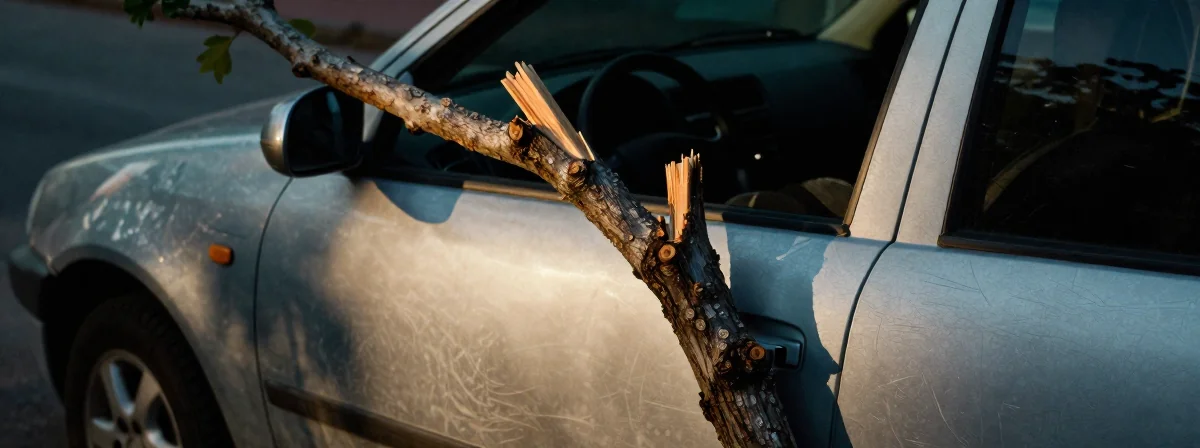
Jessica vanished three years and four months ago. She was 30 when she was last seen, which means she’d be 33 or 34 now—just a number, but one that haunts anyone who follows the case. The official narrative points to the obvious suspect, the last person seen with her. But the truth is messier than that. It’s not just about who was there; it’s about what was left behind. Like the branch jammed by the passenger door—a detail so small, it’s easy to overlook. Until it isn’t.
The case feels like a puzzle with pieces that don’t quite fit. On one hand, the suspect’s behavior is suspicious. He fled to a remote place, refused to cooperate with police—classic moves for someone trying to avoid scrutiny. But on the other hand, would an innocent man act this way? Maybe. Maybe not. The truth is, when you’re accused of murder, even if you’re innocent, the system feels like a trap. You’re damned if you do, damned if you don’t.
And then there’s Jessica herself. What was she like? What was her history? Sometimes, the answers lie not in who took someone, but in who they were and what they might have done on their own. A ride given, a path taken, a moment that spiraled out of control. It’s possible she wandered off, died alone—no crime, just a tragic accident. But possible isn’t probable, and the evidence, or lack thereof, leaves a bitter taste.
The Branch That Refused to Let Go
What does the branch jammed by the passenger door even mean? It sounds like a detail from a detective novel, but in this case, it’s real. Imagine this: Jessica gets into a car, maybe with the suspect, maybe not. As the door closes, a branch gets caught—jammed tight. It’s not just a loose twig; it’s something that holds fast, something that could have caused a struggle, or something that could have been overlooked entirely.
Some say it’s evidence of a fight. Others argue it’s just a branch. But here’s the thing: details like this don’t exist in a vacuum. They’re clues, or they’re red herrings. The question is, which is which? If the branch was jammed, did someone force it shut? Did Jessica resist? Or did she simply get out, and the branch got caught in the process? The answer could change everything.
The Weight of Suspicion
We all know how suspicion works. It’s like a virus—it spreads, it mutates, it takes hold. The last person seen with someone who goes missing is always suspect. It’s human nature. But justice isn’t supposed to be about human nature; it’s supposed to be about evidence. And in this case, the evidence is thin.
“Enough evidence”? Maybe. “No evidence”? Maybe that’s closer to the truth. The suspect is suspicious as hell, but suspicion isn’t guilt. He could be guilty, or he could be innocent and trapped by circumstance. The police, the prosecutors—they care about convictions, not innocence. And in that environment, even an innocent man might run. It’s a dark thought, but it’s the reality of the system.
The Possibility of the Unthinkable
Let’s consider the alternative. What if Jessica didn’t vanish because of foul play? What if she gave someone a ride, got out, and something happened? An accident, a slip, a moment of misfortune. It’s not likely, but it’s possible. And in the absence of concrete evidence, possibility becomes a dangerous word. It opens doors to theories that might not hold up, but that feel too plausible to ignore.
The truth is, we don’t know what happened. We have a suspect, a missing person, a branch jammed in a door. We have questions, but no answers. And in the world of cold cases, that’s the most haunting part of all.
The Family’s Longing
Three years and four months. That’s a long time to wait. For Jessica’s family, every day without answers is a day of grief. They want closure, not just for themselves, but for Jessica. To lay her to rest properly—those words carry so much weight. It’s not just about justice; it’s about dignity. About remembering her as she was, not as a missing statistic.
The branch, the suspect, the questions—they’re all part of the puzzle. But at the end of the day, it’s the human element that matters most. The longing, the uncertainty, the hope that one day, the truth will surface. Until then, the case remains unsolved, the branch remains jammed, and Jessica remains missing.
What If the Branch Was the Key?
Here’s the thing about cold cases: sometimes, the smallest details hold the biggest clues. The branch jammed by the passenger door—it could be nothing. Or it could be everything. It’s a symbol of the struggle, the confusion, the unanswered questions. It’s a physical manifestation of the mystery itself.
If we look at it that way, maybe the branch isn’t just a detail; it’s a message. A message that says: “Look closer. There’s more here than meets the eye.” Maybe the suspect is guilty. Maybe he’s innocent. Maybe Jessica’s disappearance was an accident. We don’t know. But we do know this: until we understand the branch, we won’t understand the case.
And that’s the haunting truth of it all. Sometimes, the answers are right in front of us. We just have to be willing to see them.