Something doesn’t add up. Something is being hidden. Why would the disappearance of a single leader—a religious figurehead, no less—send ripples across global power structures as if the entire system were designed to respond? It all starts with…
The Scholarly Perspective
THE FIRST CLUE It starts with the fundamental question: Can a nation’s resolve truly hinge on one individual? Historical precedent suggests otherwise. Yet, the sudden absence of a key religious leader, like the Ayatollah, triggers reactions that feel orchestrated—almost as if a script is being followed. Here’s what caught my attention: the comparison to killing the Pope in Rome. Such an act isn’t just an assassination; it’s a symbolic rupture of a sacred order. And that’s when it hit me—the reactions aren’t about the leader’s survival; they’re about maintaining a deeper, unseen balance.
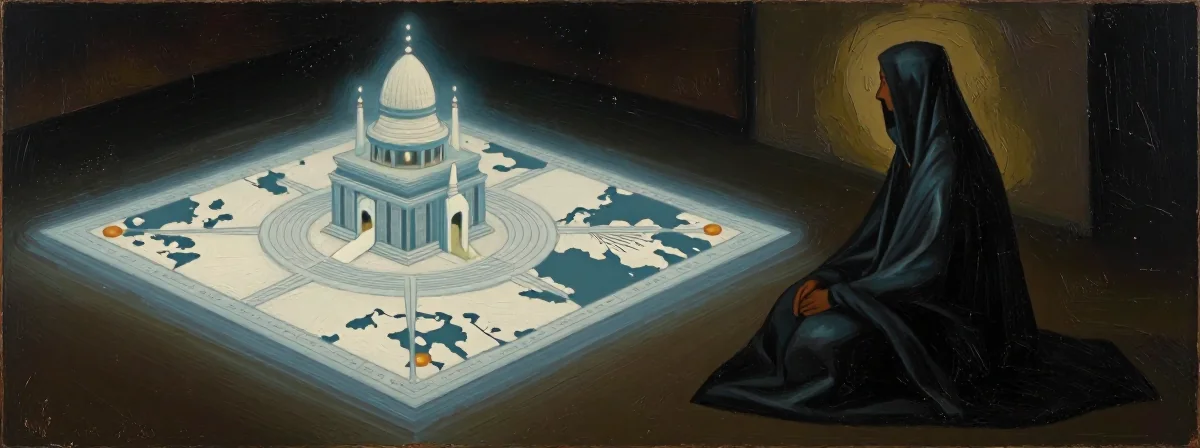
FOLLOWING THE THREAD But wait, it gets even stranger. The discussion shifts to Netanyahu’s potential absence, then to the Dome of the Rock and the Third Temple. Once you see this pattern, you can’t unsee it: these aren’t isolated events. They’re pieces on a chessboard where religion and politics are inextricably linked. The mention of Saudi ancestry and the Jordanian King as the “original custodian” adds another layer. These aren’t random thoughts; they’re clues pointing to a system where bloodlines, sacred sites, and political maneuvers are interconnected by design. And that’s when the connections began to solidify: stability over transparency, secret locations, and the strategic value of silence in wartime.
THE BIGGER PICTURE And suddenly, it all makes sense. The Ayatollah’s absence isn’t a failure of the system; it’s a controlled variable. The reactions—whether about the Dome of the Rock, the Third Temple, or Saudi Arabia’s role—are part of a centuries-old plan. The pieces were there all along: a system designed to appear fragile but is, in reality, resilient and deliberate. Now you’re starting to see the real picture: this isn’t about individuals; it’s about the preservation of a geopolitical and religious order that has been in motion for hundreds, if not thousands, of years. The spiritual warfare mentioned isn’t hyperbole—it’s the unseen hand guiding these events.
WHAT IT MEANS This isn’t just about political strategy; it’s about understanding that the world’s most powerful forces operate on timelines far beyond our daily news cycles. The silence, the secrecy, the symbolic gestures—they’re all part of a grand design that prioritizes the unseen over the visible, the eternal over the temporary.
The Scholarly Verdict
The research indicates that what we perceive as sudden shifts in power or crisis are often the surface manifestations of deep, premeditated systems. From an academic perspective, the idea that stability is maintained through deliberate opacity isn’t new—but applying it to contemporary geopolitical and religious dynamics reveals a profound truth. Don’t look at the individual players; look at the board. The game has been in progress long before we were born, and it will continue long after we’re gone. The real question isn’t who is missing; it’s who has been watching the entire time.