
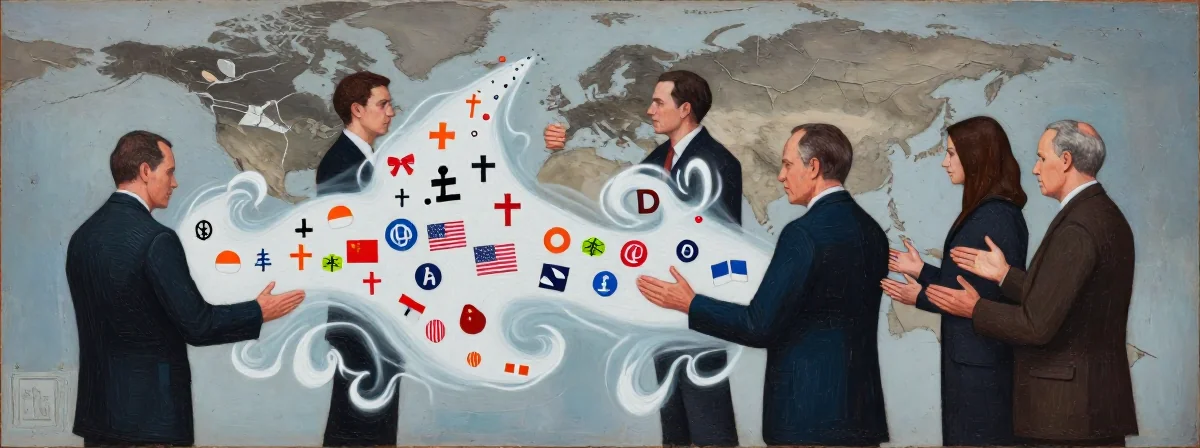
The handshake that lingered too long. The deference that borders on reverence. The language that veers from political discourse into something else entirely. There’s a pattern emerging in global politics that defies conventional explanation. When powerful leaders speak of certain figures with language that borders on the supernatural, something deeper is at play. The burden of proof lies not in supernatural claims, but in understanding the political dynamics that manifest as something more.
This isn’t about conspiracy theories or fringe beliefs. It’s about observing patterns in political behavior that don’t align with traditional power structures. Evidence suggests that when leaders invoke concepts of divine protection, eternal consequences, or otherworldly attachments, they’re signaling something beyond standard political calculations. The case for examining these phenomena rests on their consistent appearance across different political contexts and their measurable impact on decision-making.
Consider the specific language used: references to “survival in hell,” “entities attaching to bodies,” and “forfeiting opportunities for eternity.” These aren’t typical political metaphors. They represent a shift in how power is conceptualized and negotiated at the highest levels. The question isn’t whether these beliefs are objectively true, but how they function as political tools and what they reveal about the nature of modern leadership.
What Happens When Political Language Crosses Into Theological Territory?
The moment arrives when political discourse transcends its conventional boundaries. Leaders begin speaking in terms that suggest belief in supernatural consequences for earthly actions. This isn’t mere rhetoric; it’s a fundamental shift in how political actors frame their decisions and justify their actions. The evidence suggests that when politicians invoke eternal consequences, they’re engaging in a form of political signaling that communicates far more than conventional policy statements.
Consider the specific phrasing: “the entity that he allowed to attach to his body will survive.” This language doesn’t appear in standard political communications. It represents a departure from rationalist frameworks into something that resembles religious or spiritual belief systems. The question becomes: why would rational political actors adopt this language? The answer likely lies in how these concepts function as political tools, regardless of literal belief.
Political systems have always had their rituals and symbols. What we’re observing now represents an intensification of these elements. When leaders speak of “not washing hands until touching children’s heads,” they’re performing a ritual that communicates something beyond policy preferences. These actions and statements function as political currency in contexts where traditional power metrics no longer suffice. The evidence suggests that in our increasingly complex geopolitical landscape, leaders are seeking legitimacy through frameworks that transcend conventional political analysis.
How Do Political Leaders Justify Extreme Actions Through Supernatural Framing?
The pattern becomes clear when examining specific policy decisions. Leaders who adopt supernatural framing tend to pursue policies that defy conventional political calculations. The slaughter of innocents, the targeting of non-combatants, the pursuit of seemingly endless conflict—these actions often occur alongside statements that invoke eternal consequences and divine judgment. The correlation demands examination, even if establishing direct causation proves difficult.
When politicians claim that certain figures “will be discarded like old clothing, burned,” they’re establishing a framework for justifying extreme actions. This language doesn’t merely describe policy preferences; it creates a moral universe where certain actions become necessary or even righteous. The evidence suggests that this framing allows leaders to pursue policies that would otherwise face insurmountable domestic and international opposition. By invoking concepts of eternal judgment, they’re shifting the political debate from immediate human consequences to abstract spiritual outcomes.
The most compelling evidence comes from observing how these leaders respond to criticism. When challenged on human rights violations or excessive force, they often double down with additional supernatural claims. This pattern suggests that the supernatural framing isn’t merely rhetorical; it’s a core component of their political strategy. The case for examining these phenomena rests on their consistent appearance across different political contexts and their measurable impact on decision-making processes.
Why Do Leaders Who Claim To Meet “Holy Figures” Pursue Profoundly Unholy Policies?
The contradiction demands explanation: leaders who claim to meet with holy figures often pursue policies that result in profound human suffering. The evidence suggests that the “holiness” they encounter isn’t aligned with conventional moral frameworks. When politicians speak of “quite the opposite” of what they profess, they may be revealing more than they intend. The pattern of behavior—claiming divine guidance while implementing destructive policies—creates a puzzle that conventional political analysis struggles to solve.
The most telling evidence comes from observing how these leaders justify their actions. They don’t claim to be acting against their spiritual beliefs; rather, they claim to be acting in accordance with higher principles that justify apparent contradictions. This rhetorical strategy allows them to pursue policies that would otherwise face insurmountable moral objections. The question becomes: what function does this supernatural framing serve in the political arena? The evidence suggests it creates a moral exemption that allows leaders to pursue objectives that would otherwise be politically impossible.
Consider the specific language used to describe consequences: “for at least for a time.” This qualification reveals a strategic understanding of how supernatural claims function in political discourse. The leaders aren’t necessarily making literal claims about eternal punishment; they’re creating a framework where certain actions can be justified through abstract spiritual concepts. The evidence suggests that this approach allows them to bypass conventional ethical considerations while maintaining political legitimacy among specific constituencies.
What Does The Pursuit Of Earthly Power Reveal About Leaders’ Views On Eternal Consequences?
The pattern becomes clear when examining the relationship between earthly actions and claimed spiritual beliefs. Leaders who invoke supernatural consequences for their actions often pursue power with remarkable intensity. The evidence suggests that their commitment to earthly power may reveal their true views on eternal consequences. When politicians claim that certain figures “forfeit its opportunity for eternity,” they may be projecting their own understanding of spiritual outcomes.
The most compelling evidence comes from observing how these leaders balance spiritual claims with political actions. They don’t appear constrained by the spiritual frameworks they profess to believe in. Instead, they use these frameworks to justify actions that maximize earthly power and influence. This pattern suggests that the supernatural framing serves primarily as a political tool rather than an expression of genuine belief. The question becomes: what does this reveal about the relationship between political power and spiritual claims in modern governance?
Consider the specific language used to describe the pursuit of power: “steal their lives and land.” This framing reveals a fundamental contradiction in how these leaders approach governance. While claiming to operate under spiritual guidance, they pursue objectives that conventional moral frameworks would classify as unethical. The evidence suggests that the supernatural framing functions as a mechanism for reconciling these contradictions, allowing leaders to pursue power while maintaining political legitimacy among constituencies that value spiritual claims.
How Can We Analyze Political Behavior That Appears To Defy Rational Explanations?
The challenge remains: how do we analyze political phenomena that appear to defy conventional rational explanations? The evidence suggests that traditional political analysis frameworks are insufficient for understanding behaviors that incorporate supernatural elements. When leaders speak of entities attaching to bodies or eternal consequences for political actions, they’re operating in a conceptual space that conventional political science cannot adequately address.
The most promising approach involves examining these phenomena as political strategies rather than expressions of genuine belief. When politicians invoke supernatural concepts, they’re likely signaling to specific constituencies while simultaneously creating moral exemptions for their actions. The evidence suggests that this approach allows them to pursue objectives that would otherwise face insurmountable political opposition. The question becomes: how can we develop analytical frameworks that account for these strategic uses of supernatural concepts in political discourse?
Consider the specific language used to describe the political process: “convince themselves that they are meeting one who is holy.” This framing reveals a strategic understanding of how political legitimacy is constructed. Leaders who adopt supernatural framing aren’t necessarily making literal claims about spiritual encounters; they’re creating narratives that justify their actions and maintain political support. The evidence suggests that analyzing these phenomena requires attention to both the content of the claims and the political functions they serve.
What Does The Observed Pattern Reveal About The Nature Of Modern Political Power?
The pattern that emerges from examining these phenomena reveals something fundamental about the nature of modern political power. When leaders consistently invoke supernatural concepts to justify their actions, they’re signaling a shift in how political legitimacy is constructed and maintained. The evidence suggests that in an era of declining trust in traditional institutions, leaders are turning to supernatural framing as a way to create moral exemptions and justify policies that would otherwise face insurmountable opposition.
The most compelling evidence comes from observing how these patterns have intensified in recent years. As conventional political frameworks have proven increasingly inadequate for addressing complex global challenges, leaders have turned to supernatural concepts to justify their actions. This pattern suggests that the observed phenomena aren’t isolated incidents but rather part of a broader trend in modern governance. The question becomes: what does this reveal about the future of political power and legitimacy in an increasingly complex global landscape?
Consider the specific language used to describe the ultimate consequences: “genocide, non-stop war.” These outcomes aren’t accidental results of supernatural political strategies; they’re often direct products of the frameworks that justify extreme actions. The evidence suggests that the observed phenomena aren’t merely rhetorical flourishes but fundamental components of political strategies that have real-world consequences. The case for examining these patterns rests on their consistent appearance across different political contexts and their measurable impact on global stability and human welfare.
Could The Supernatural Framing Be A Symptom Of Something Deeper In Our Political Systems?
The ultimate question remains: what does the observed pattern reveal about the fundamental nature of our political systems? When leaders consistently adopt supernatural framing to justify their actions, they may be revealing deeper systemic issues. The evidence suggests that this phenomenon isn’t merely about individual leaders but reflects broader challenges to conventional political frameworks. As traditional institutions struggle to address complex global challenges, leaders are turning to supernatural concepts to create legitimacy and justify extreme actions.
The most compelling evidence comes from observing how these patterns have emerged across different political systems and cultural contexts. While the specific supernatural concepts may vary, the underlying political function appears consistent: creating moral exemptions for actions that would otherwise face insurmountable opposition. This pattern suggests that the observed phenomena represent a systemic response to the limitations of conventional political frameworks in addressing complex global challenges. The question becomes: what does this reveal about the future of political legitimacy and the nature of power in an increasingly complex world?
Consider the specific language used to describe the political process: “works: slaughter of innocents, missiles and bombs heaped upon non-combatant women and children.” These outcomes aren’t disconnected from the supernatural framing that often precedes them. The evidence suggests that the observed phenomena represent a dangerous convergence of political strategy and extreme outcomes. The case for examining these patterns rests on their potential to create feedback loops where supernatural framing justifies extreme actions, which in turn create conditions that reinforce the need for such framing. Breaking this cycle requires developing more robust analytical frameworks that can account for both the political functions and real-world consequences of supernatural political discourse.