
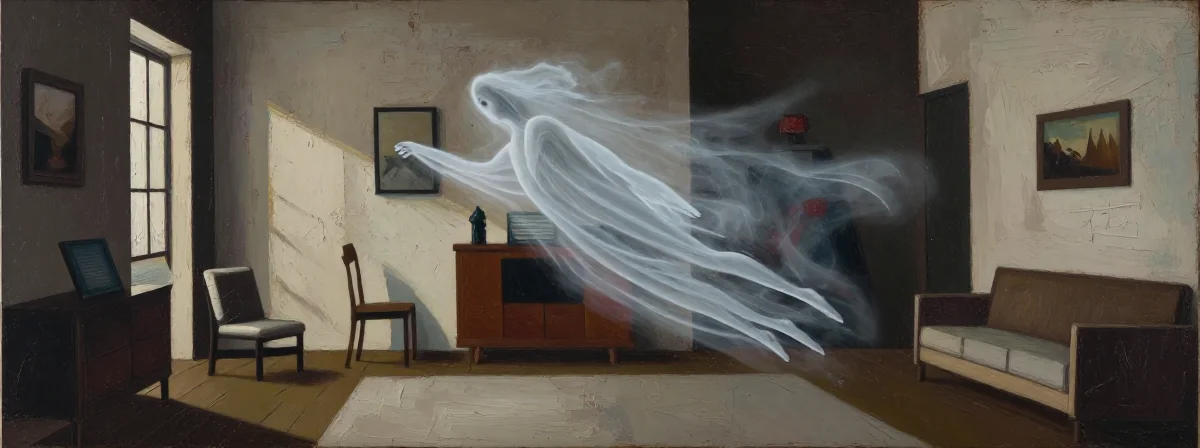
Something doesn’t add up. Something is being hidden in plain sight. You see a figure in your home, and your mind immediately leaps to explanations that range from the supernatural to the scientifically improbable. But what if neither explanation quite fits? It all starts with…
Performance Analysis
THE FIRST CLUE It starts with the immediate interpretation of an unexplained event. You see a woman dancing in your home, and your first thought isn’t “What is happening?” but rather “An angel came to see me.” This immediate emotional response, this need to frame the unknown through a comforting narrative, is the first clue. The house’s age becomes relevant not because it’s old, but because you’re already searching for justifications that align with your belief system.
FOLLOWING THE THREAD And that’s when it hit me—the question about eye contact isn’t just casual curiosity. It’s a probe into the nature of the encounter. Did she make eye contact? The answer would determine whether this was a passive observation or an interactive experience. But more importantly, the suggestion of a “nice ghost” reveals how quickly we categorize the unknown. We don’t just experience something strange—we immediately assign it moral qualities. But wait, it gets even stranger—the leap to “space-time tear” shows how uncomfortable we are with simple explanations. Rather than considering mundane possibilities, we jump to quantum physics and alternate dimensions. Once you see this pattern, you can’t unsee it: we’re not just experiencing events—we’re constructing elaborate narratives to contain them.
THE BIGGER PICTURE And suddenly, it all makes sense. The real mystery isn’t the dancing woman or the old house—it’s our own minds and how they process the unknown. The pieces were there all along: the immediate emotional response, the need to categorize, the rejection of simple explanations in favor of complex ones. Now you’re starting to see the real picture: we’re not just passive observers of reality—we’re active constructors of it. Every unexplained event becomes a canvas upon which we paint our deepest fears and hopes.
WHAT IT MEANS This isn’t just about ghosts or time tears—it’s about how our perception itself is a form of storytelling. The dancing woman in the old house becomes a mirror reflecting our own cognitive biases. What we thought was an external mystery is actually an internal one, revealing how we construct our understanding of the world around us.
Should You Buy It?
The real question isn’t whether the house is haunted, but whether you’re ready to examine how your own mind creates the reality you experience. Don’t just accept the stories your mind tells you—question them. Look beyond the immediate narrative and consider what might be hiding in the gaps. The mystery isn’t in the house—it’s in how you perceive it.