
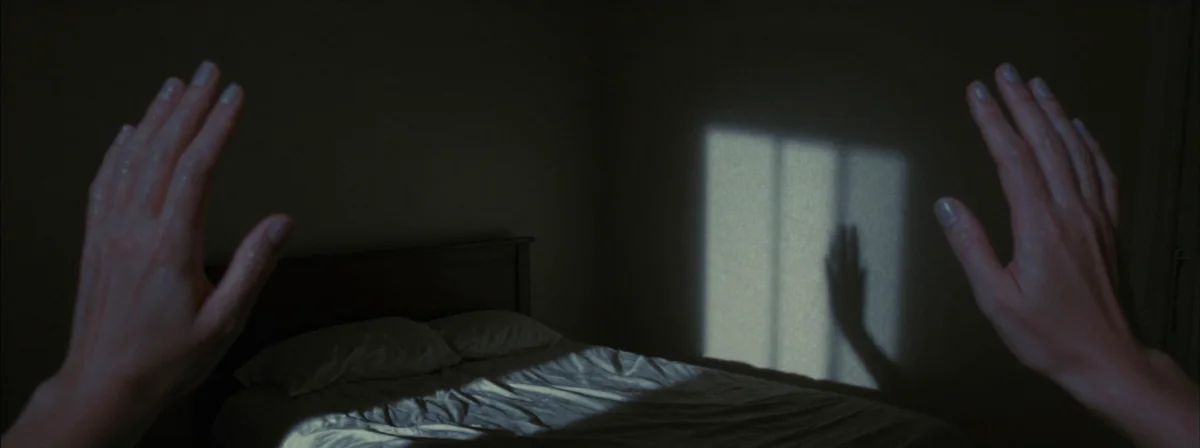
Some nights, the line between dreams and reality blurs in ways that leave a lasting imprint. That sudden, sharp pressure against your ribs. The unmistakable poke that wakes you with a start. For years, John had dismissed these moments as sleep paralysis—until the night he felt something cold press against his neck, cutting off his breath. It wasn’t just a dream. The marks on his skin in the morning told a different story.
The truth is, what happens in the dark hours between consciousness and sleep might reveal more about our reality than we’re prepared to accept. These unexplained touches, these midnight disturbances, aren’t always products of imagination or medical conditions. Sometimes, they’re invitations—or warnings—from something beyond our everyday understanding.
I’ve spent decades studying these boundary moments, speaking with those who’ve felt the invisible hand. What emerges isn’t just folklore; it’s a pattern of experiences that connect us to forces most would rather ignore.
What Happens When You Feel That First Poke?
The initial contact is always the same: a sudden awakening, followed by that distinct pressure against your body. For Sarah, it began as gentle taps on her shoulder during her eighth year in the century-old farmhouse. “It started playful,” she told me, her voice still catching at the memory. “Little pokes, like someone testing the waters.” Until the night she felt hands around her throat.
These aren’t the casual touches of sleep paralysis, which typically manifests as temporary inability to move while falling asleep or waking up. The poking phenomenon carries a different quality—a deliberate, almost testing nature that suggests awareness. When retired firefighter Mike first experienced it after his near-drowning experience, he recognized the pattern instantly. “It was like they were checking my boundaries,” he explained. “First the ribs, then the neck, then the face.” His team had revived him after thirty seconds underwater, but something else had noticed his brush with death.
The distinction matters. Sleep paralysis often comes with hallucinations and a sense of weight on the chest, but lacks the specific, targeted nature of these poking encounters. And while oxygen deprivation before birth might explain certain sensations, it doesn’t account for the pattern of interaction—testing, probing, sometimes escalating.
The Difference Between Playful Spirits and Something More
Not all nighttime visitors have malicious intent. Many paranormal investigators will tell you that spirits interact with the living in ways that reflect their own understanding of our world. The playful spirit might poke, touch, or move small objects—actions that, while startling, aren’t inherently harmful.
Mike’s experiences, however, crossed that line. After investigating disaster sites like Ground Zero and the Pentagon, he developed a sensitivity that extended beyond the physical world. “They test us,” he said, his eyes wide with memory. “First it’s the ribs, like they’re saying ‘Hello.’ Then the neck, testing our vulnerability.” His first clear encounter came during an EVP session in a known active location. “I was Mr. Macho then,” he laughed grimly. “Until something poked me so hard I jumped three feet in the air.”
The escalation pattern is what distinguishes potentially malevolent entities. While a playful spirit might continue with similar antics, something more sinister will test boundaries—first with pokes, then with pressure, and finally with choking sensations. This progression isn’t random; it’s a deliberate communication that demands attention.
When you feel that first poke, consider the context. Is it isolated? Does it follow a pattern? Are there other signs—unusual cold spots, objects moving, or unexplained sounds? These details help determine what you’re truly dealing with.
Protection Isn’t Just About Belief
Many suggest prayer or anointing entryways with oil, as one homeowner found effective against their century-old house’s disturbances. “I anoint all entryways now,” they shared. “After that poke hurt so badly, I knew I had to create barriers.”
But protection extends beyond ritual. Understanding what you’re facing allows for more targeted responses. The retired firefighter developed his own approach after years of paranormal investigation. “You have to establish boundaries,” he explained. “Not just physically, but energetically.” His method combines respect with firmness—a middle ground that acknowledges the presence without inviting escalation.
For those who’ve experienced choking sensations, the approach must be different. This level of interaction suggests a more assertive entity that may not respond to gentle methods. Here, the advice shifts toward seeking experienced help—someone who can identify the nature of the presence and suggest appropriate countermeasures.
The most effective protection combines awareness with action. Knowing the signs helps you recognize escalation. Understanding patterns allows you to anticipate next moves. And having tools—whether spiritual, psychological, or physical—ensures you’re prepared when that first poke becomes something more.
Medical Explanations Can’t Explain Everything
It’s wise to rule out medical conditions. Sleep paralysis, nerve damage, even carbon monoxide poisoning can create sensations that mimic paranormal activity. One person shared their experience with oxygen deprivation before birth causing specific poking sensations on the top of their head.
Yet, when medical explanations fall short, something else may be at play. The consistent pattern across different people, in different locations, with similar experiences—these aren’t easily dismissed as collective hallucination. The retired firefighter’s experiences, documented across multiple investigations, demonstrate how these phenomena transcend individual psychology.
Consider the timing and context. Sleep paralysis typically occurs during transitions between sleep stages. Paranormal poking often happens at specific times—when you’re most vulnerable, when you’ve recently crossed a threshold (moving into a new home, experiencing trauma), or when you’ve inadvertently invited attention through spiritual practices.
The distinction isn’t just academic. Medical conditions require medical treatment. Paranormal encounters demand awareness, boundaries, and sometimes, intervention from those who understand these interactions better.
Why Some Encounters Never Go Away
The most disturbing aspect of these poking encounters isn’t the sensation itself, but what it represents. For John, the choking incident wasn’t a one-time event. It became a pattern, escalating until he learned to respond differently. “I finally understood they were testing my fear,” he realized. “When I stopped reacting, they stopped coming.”
This insight reveals something crucial about these interactions: they often respond to our awareness. Ignoring them doesn’t make them go away; it allows them to escalate. Conversely, understanding their nature and responding appropriately can establish a new dynamic—one where you’re no longer just a passive recipient but an active participant in the interaction.
The eight-year experience shared by one homeowner illustrates this point. For years, the poking continued until they developed their protection method. The solution wasn’t complex, but it was consistent—a daily practice that acknowledged the presence without inviting further interaction.
These encounters don’t have to define your reality. They can become opportunities to develop awareness, establish boundaries, and ultimately, transform fear into understanding. The invisible forces that poke in the dark may be testing us, but they also offer a chance to test our own awareness and resilience.
The Final Awakening
What begins as a simple poke can become a profound education. Those who’ve walked this path describe a transformation—not just in how they perceive the world, but in how they understand themselves. The retired firefighter, once skeptical, now leads investigations with an open mind. The homeowner no longer fears their century-old house. And John, after his choking experience, developed techniques that helped others facing similar encounters.
The poking in the dark isn’t just a physical sensation; it’s a metaphor for the unknown aspects of our reality. By acknowledging these experiences, investigating their nature, and responding with awareness rather than fear, we transform potential threats into opportunities for growth.
The next time you feel that sudden pressure in the dark, remember: it’s not just about what’s poking you. It’s about what you choose to do next. That response—calm, aware, and deliberate—might be the most powerful force in the room.