
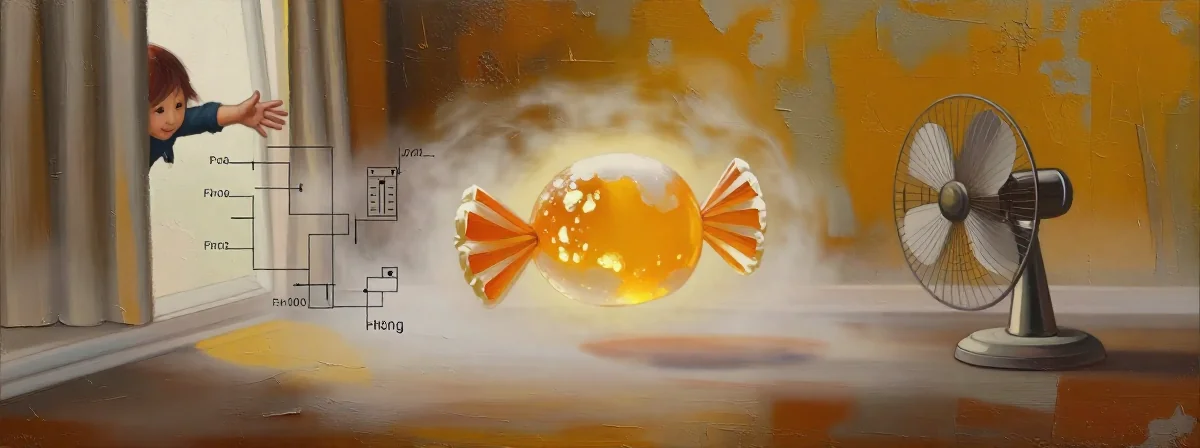
Something doesn’t add up. A bowl of sweets disappears overnight, but no one knows how—or why. Theories range from ghosts to secret intruders, but the truth might be simpler than you think. It all starts with a clever suggestion: “Try sprinkling flour/baby powder on the table before you put the bowl of sweets down. They were actually very respectful of the food unless it was on a certain table. The flour will show you any tracks/footprints that are left behind.”
THE FIRST CLUE
It starts with the powder. The idea to use flour or baby powder isn’t just a random tip—it’s a practical way to reveal what’s really happening. If something—or someone—is taking the sweets, footprints will tell the story. Mice, insects, or even a wandering pet could be the culprit, and the powder would make their presence undeniable. It’s a simple test that cuts through the mystery with cold, hard evidence.
FOLLOWING THE THREAD
And that’s when it hit me: the flour isn’t just for tracking; it’s a filter. It forces us to consider the mundane before jumping to the extraordinary. The suggestion to install a camera and leave the house is another piece of the puzzle—a way to capture the truth, whether it’s a person, an animal, or something else entirely. But wait, it gets even stranger when another idea surfaces: checking every room, closet, and crawl space for signs of “phrogging”—unauthorized people living in the home. Once you see this pattern, you can’t unsee it: the more we dig, the more we realize how many hidden possibilities exist.
THE BIGGER PICTURE
And suddenly, it all makes sense. The sweets aren’t vanishing because of ghosts or family spirits trying to communicate—they’re vanishing because of something tangible, something real. The pieces were there all along: the mice that respect certain tables, the unauthorized person who might be living in the attic, the pet that sneaks treats in the night. Now you’re starting to see the real picture: the supernatural is often the first explanation we reach for, but the truth is usually closer to home—and more practical than we imagine.
WHAT IT MEANS
This isn’t just about a missing bowl of sweets; it’s about how we approach the unknown. We’re so quick to believe in the extraordinary that we often overlook the ordinary. The truth is, most mysteries have logical explanations—and the tools to find them are usually simple and within reach. The next time something doesn’t add up, ask yourself: what’s the simplest explanation? It might just be the right one.
Is It Worth It?
The effort to uncover the truth is always worth it—not because of what you might find, but because of what you might not. By ruling out the obvious, you save yourself from unnecessary fear and confusion. But more than that, you learn to trust your own judgment and the power of practical solutions. The next time you face a mystery, remember: the answer is often simpler than you think—and it’s always worth looking for.