
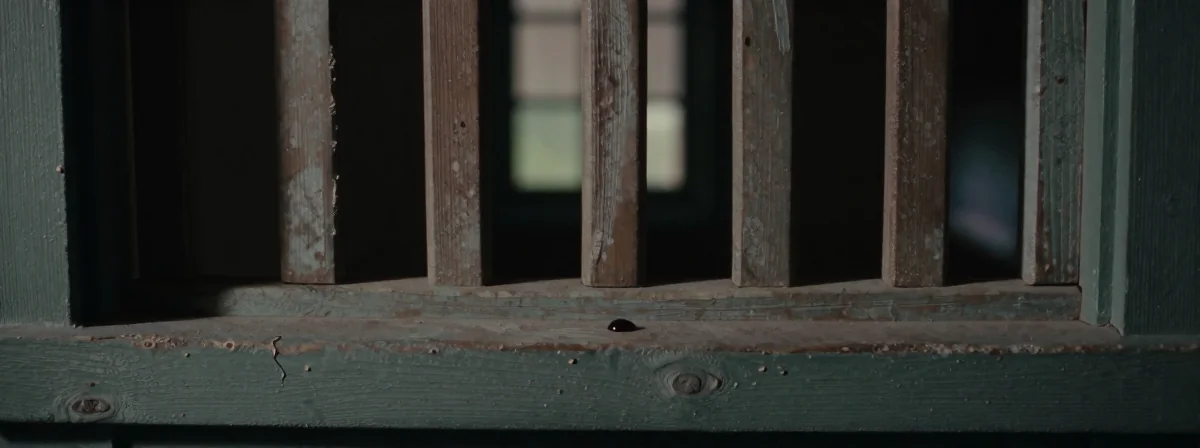
The morning light filtered through the bedroom curtains just right to catch it—a tiny, dark spot on the bathroom floor. Not a splash, not a smear, but a single, perfect droplet of something that looked disturbingly like blood. You’ve seen those crime shows, right? The ones where the smallest detail becomes the key to everything? That’s what this felt like, except instead of a murder mystery, it was a mystery about a house that had been in your family for generations and cats that wouldn’t catch their own reflections in a mirror.
It wasn’t until later, when you mentioned it to your partner, that the real question emerged: how did that blood get there? The bathroom door had been closed. The cats were… well, they were cats. And yet, there it was. A mystery that would unravel in ways you never expected, revealing truths about old houses, pet behavior, and the strange little dramas that unfold when no one’s looking.
The truth is, old houses have stories. They hold onto secrets in the creaks of their floorboards, the drafts that come from nowhere, and yes, even in the tiny bloodstains that appear without explanation. You’re about to discover what that single droplet of blood can teach us about the hidden lives happening right under our noses.
Could a Cat Really Leave a Bloodstain Without Anyone Noticing?
Let’s be honest—when you think of your cat as a predator, you’re probably thinking of those dramatic photos of lions on the Serengeti. The reality is usually more like watching your pet fail to catch a feather toy that’s literally dangling in front of its face. “My cats at the time were pretty pathetic when it came to catching anything, even a stationary catnip toy mouse,” you might think, nodding in recognition.
And yet… stranger things have happened. The cat that can’t jump onto the counter somehow always manages to knock over the most expensive vase. The dog that “doesn’t know how to fetch” suddenly develops uncanny aim when a steak falls to the floor. There’s a certain selective incompetence that seems to come with domestication. One person shared how their “very pampered, lazy, overweight house cats” managed to catch a small mouse during Christmas, a feat that seemed impossible given their usual hunting skills—or lack thereof.
The bloodstain on your bathroom floor wasn’t from a dramatic cat vs. mouse battle. It was likely from a quick, almost accidental encounter. Maybe the mouse darted through an opening just as the cat lunged, leaving behind a tiny mark before disappearing into the walls. Old houses aren’t just structures; they’re ecosystems with their own food chains, hidden from view but always present. That blood wasn’t evidence of a failed hunt—it was evidence of a world operating on its own terms, right alongside yours.
Why Do We Underestimate Our Cats’ Instincts So Dramatically?
There’s something uniquely humbling about watching your 14-year-old, slightly overweight cat suddenly exhibit predatory precision. It’s like discovering your elderly grandmother used to be a professional boxer. The disconnect between how we see our pets and who they actually are runs deep. “They are both 14 and Very pampered, lazy, overweight house cats,” you might say, only to have them prove you wrong the very next day.
Cats carry a genetic memory that predates their relationship with humans by thousands of years. Even the fluffiest Persian has the hunting instincts of a wild ancestor. When we see our cats lounging in sunbeams, we forget they’re descended from creatures that had to catch their dinner or go hungry. That instinct doesn’t just disappear because we provide food in a bowl. It goes dormant, waiting for the right moment to surface—like when a small, moving creature crosses their path.
The bloodstain in your bathroom wasn’t a fluke. It was evidence of those ancient instincts still operating beneath the surface of your cat’s sleepy demeanor. Think about it: the cat didn’t need to catch the mouse for food. There was no reward beyond the instinctual drive to pursue movement. That’s the power that still runs through their veins, even when they weigh more than their wild ancestors and sleep 20 hours a day.
How Do Old Houses Create Their Own Secret Ecosystems?
The closed bathroom door wasn’t just a barrier to your sight—it was a portal to another world. Old houses aren’t just structures; they’re environments that create their own ecosystems. The gaps between floorboards, the spaces behind walls, the attics and basements that rarely see human feet—these are the habitats for creatures that coexist with us without our knowledge. “There can definitely be small rodents, etc in an old house,” is an understatement. There’s an entire hidden community.
When you walk through an old house, you’re like a character in a novel who only sees the main characters while missing the supporting cast entirely. The mice that scurry through walls, the spiders that build webs in forgotten corners, the insects that find shelter in insulation—these are the unsung inhabitants of your home. They have their own routines, their own territories, their own dramas that unfold when the lights go out.
That bloodstain wasn’t just from a cat encounter. It was evidence of the intersection of these parallel worlds. The mouse wasn’t just a random visitor—it was part of an established population that has learned to navigate your home in ways you can’t imagine. The cat wasn’t just a pet—it was a predator that occasionally taps into ancient instincts. And you, finding the bloodstain, became the detective who discovered the evidence of this hidden drama.
What Does a Single Bloodstain Reveal About the Truths We Ignore?
The human mind is remarkable at creating narratives to explain the unexplainable. We see a bloodstain and immediately start constructing stories—some logical, some dramatic, some completely off-base. But what if the truth is simpler, and yet more complex, than any story we can tell? “I don’t think they would have been able to catch a mouse with us in the room and for us not to have noticed that or the blood as we left the bathroom,” you reason, and you’re probably right about the timing.
But timing isn’t the only factor at play. The house itself has a timeline different from yours. The cat operates on instinct, not strategy. The mouse exists in a world where seconds matter, not minutes. When these different timelines intersect, strange things happen. A moment that seems impossible to you is perfectly normal in the context of the house’s hidden ecosystem.
That single bloodstain wasn’t just evidence of an event—it was evidence of the disconnect between your perception and reality. You see a closed door and assume it’s sealed. You see your cat and assume it’s just a pet. You see your home and assume it’s just a structure. But the bloodstain reveals something different: that reality is layered, complex, and operates on principles you barely understand. It’s a reminder that the world doesn’t stop when you’re not looking—it just continues in ways you can’t see.
Why Do We Find Comfort in Simple Explanations for Complex Realities?
The logical explanation—that a cat caught a mouse despite all odds—is comforting. It fits into our understanding of how the world works. It doesn’t require us to consider the hidden ecosystems, the ancient instincts, the parallel timelines that coexist with our own. “Maybe one of the cats ate a small mouse and left behind its blood?” is a sentence that brings closure, even if it doesn’t quite match the evidence.
We humans have a remarkable ability to simplify complexity. We create categories, labels, and narratives that make the world feel manageable. But sometimes, the truth is more nuanced than our explanations allow. The bloodstain wasn’t just from a cat catching a mouse—it was evidence of the entire ecosystem that exists alongside your human world. It was a reminder that your home is more than just walls and floors; it’s a living environment with its own dramas, its own inhabitants, its own secrets.
The next time you find something inexplicable in your home—a strange noise, a mysterious mark, a sudden change—you might remember this bloodstain. You might remember that the simplest explanation isn’t always the complete one. And you might start to see your home not just as a place you live, but as a world that exists independently of your awareness, full of stories that happen whether you’re there to witness them or not.
That single droplet of blood wasn’t just a mystery to be solved. It was an invitation to see your world differently—to recognize that the stories happening around you are as complex and fascinating as any you could imagine. And maybe, just maybe, that’s the most comforting thought of all.