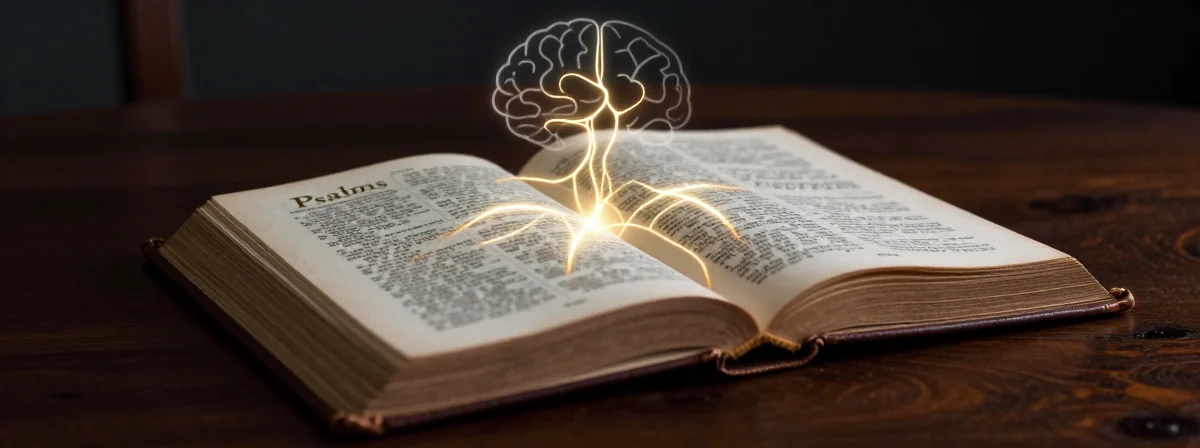
The book didn’t just open. It snapped shut, landing on a specific page, the text illuminated by the afternoon sun. To the untrained eye, this looks like a hardware malfunction of the physical world—something supernatural. To the analyst, it looks like a processing error in the human brain.
We love to attribute agency to randomness. It’s a survival mechanism gone rogue. When the brain encounters a data point it can’t immediately categorize, it doesn’t sit idle. It frantically searches its database for a match, often prioritizing the most emotionally charged possibility over the physically probable one. That feeling of dread isn’t coming from a spirit in the closet; it’s coming from a mismatch between sensory input and logical processing. We are hardwired to find patterns, even when none exist, and to fear the unknown more than the known.
Why Your Brain Prioritizes the Spooky Explanation
Your brain is a prediction machine. It runs thousands of simulations every second to keep you alive. When you walk into a room and a book opens, your brain runs a simulation: Is there a draft? Did I bump the shelf? Is there a timer? If the answer is “no,” the simulation fails. The brain then triggers a secondary process: Is there a threat? The presence of a book, especially one with religious or significant text like Psalms, triggers a specific association in the human psyche. The brain takes the “no” from the physics engine and overrides it with a “yes” from the emotional engine.
This isn’t a glitch; it’s a feature. It’s called apophenia—the tendency to perceive connections between unrelated things. In a high-stress environment, like watching a horror movie right before entering a quiet house, the brain lowers its threshold for what constitutes a “threat.” The guest who saw a woman in the closet wasn’t seeing a ghost; her visual cortex was filling in the gaps of a dark, ambiguous shadow with the most familiar, terrifying archetype it could access.
The “Uncanny Valley” of Coincidence
We often dismiss these events as “too coincidental,” but in statistics, probability is rarely as simple as it seems. The odds of a book falling open to a specific page are low, yes. But the odds of a book not falling open to a specific page are astronomically high. You only remember the event when it happens; you don’t write a diary entry every time a book stays shut.
This is the confirmation bias loop. You experienced the event, you felt the fear, and then you looked for evidence to support that fear. The guest’s scream and the subsequent blackout weren’t caused by a spirit; they were caused by a sudden spike in cortisol and adrenaline. The brain’s sensory processing was flooded, leading to a “system crash” in the form of a blackout. The house wasn’t haunted; the host’s nervous system was overloaded by a misinterpretation of reality.
Understanding the Physics vs. The Narrative
It is easy to look at a closed book on a shelf and assume it is static. Physics tells a different story. Books are heavy objects with high friction coefficients. For a book to open on its own, a specific set of variables must align—air currents, shelf vibration, or an imbalance in the center of gravity. These variables exist constantly in any room.
The human brain is terrible at calculating these variables in real-time. It doesn’t have the processing power to calculate air pressure differentials or the friction of a book spine against the wood. Instead, it defaults to the path of least resistance: the narrative. The narrative of the haunting is computationally cheaper for the brain to process than the complex physics of air currents. We choose the story because it requires less cognitive effort, even if it is factually incorrect.
Reframing the Experience
That feeling of unease you felt when you brushed it off? That was your conscious mind finally catching up to your subconscious panic. It wasn’t a lingering presence; it was the lingering echo of a false alarm. The brain had successfully predicted a threat, reacted to it, and then, when the threat was proven false, left a residue of stress.
You don’t need to fear the house. You need to understand the software you are running. The next time a book falls open or a shadow moves, don’t look for the ghost. Look for the draft. Look for the timer. Your brain is trying to save your life by screaming at you, but sometimes, it just needs to be told to calm down.